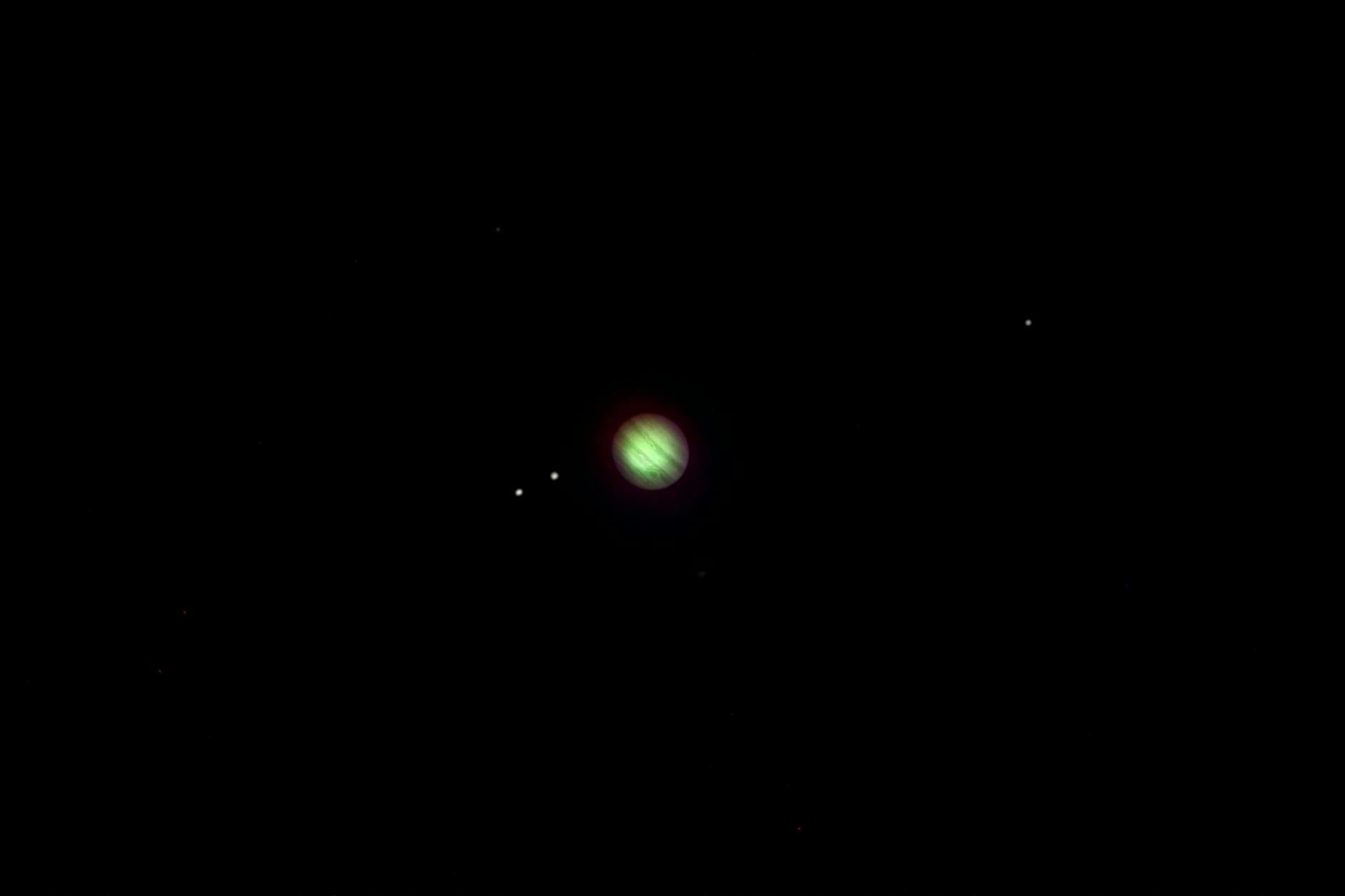
A new research paper published in the International Journal of Astrobiology posits that life on Jupiter’s moon, Europa, may actually be descended from terrestrial bacteria. Author Zaza Osmanov of the Free University of Tbilisi suggests that dust grains carrying living microbes could be ejected from Earth's atmosphere, survive the harsh conditions of space, and ultimately seed the icy moon.
According to the study, Earth has been shedding life-bearing particles into the solar system for approximately 3.55 billion years. Osmanov argues that because this process has persisted for such a massive timeframe, the transport of life to other bodies in the solar system is a "highly plausible" scenario.
"Life on Earth originated at least 3.55 billion years ago, which implies that for approximately that long, Earth has been shedding life-bearing particles into surrounding space," Osmanov stated in the paper. "Hence, if favorable conditions exist elsewhere in the Solar System and can be accessed by dust particles, the transport of life from Earth appears plausible and may have been occurring over the course of several billion years."
To reach this conclusion, Osmanov modeled the rate at which impacts dislodge bacteria from Earth and the subsequent survival rate of those microbes during transit. He determined that trillions of these particles could have landed on Europa’s surface over tens of millions of years. Once on the surface, he suggests, these organisms could have migrated through fissures in the moon's ice shell to reach the subsurface ocean below.
Scientific debate on panspermia
This theory, known as panspermia, remains a point of contention within the scientific community. While Osmanov’s model suggests a high probability of Earth-to-Europa transfer, other experts have arrived at different conclusions.
The late geophysicist H. Jay Melosh previously argued against the likelihood of such a migration. During a 2019 meeting of the American Geophysical Union, Melosh asserted that any life discovered in the oceans of Europa or Enceladus would likely be indigenous to those moons rather than biological cargo from Earth or Mars.
The question of whether Europa hosts alien life—or our own distant biological relatives—remains one of the primary goals of current space exploration. NASA’s Europa Clipper mission is currently en route to the Jovian system to investigate the moon’s habitability and scout potential landing sites for future surface missions.