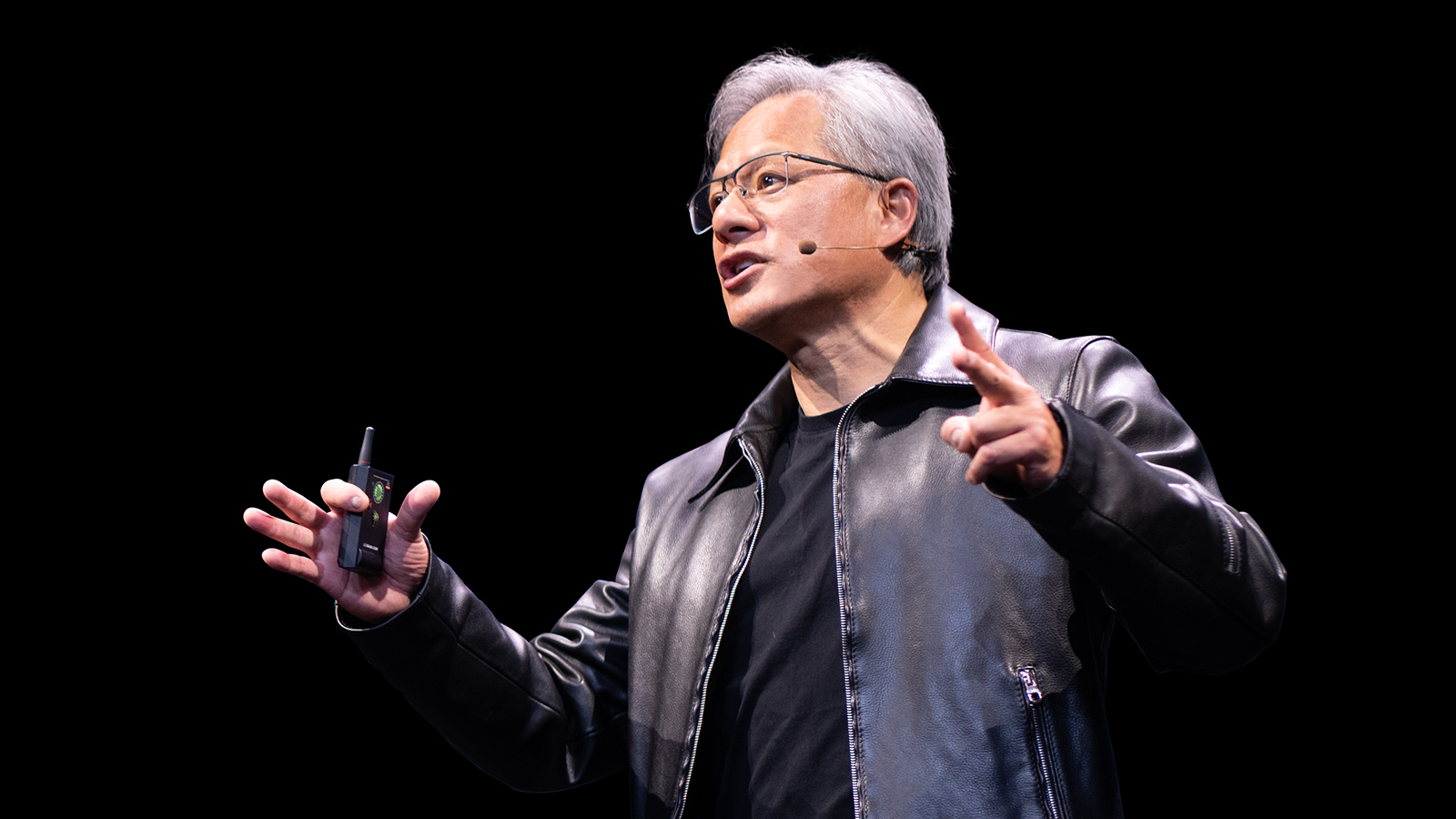
At the recent GTC conference, Nvidia CEO Jensen Huang announced plans to integrate over a thousand GPUs into a single massive computing system by 2028 using photonic interconnect technology. To support this scale, Nvidia has recently invested billions of dollars in optical communications and interconnect firms such as Marvell, Coherent, and Lumentum, aiming to secure its supply chain well in advance.
In his keynote address, Huang emphasized the immense capacity demands facing the ecosystem. "We need more copper, more optics, and more co-packaged optics (CPO) capacity, which is why we are building the foundation for growth together with our partners," he stated.
The Technical Evolution from Copper to Optics
Nvidia’s embrace of optics is no coincidence. When ChatGPT launched in 2022, Nvidia realized that its existing eight-GPU systems could no longer meet the training requirements of large-scale AI models. The subsequent Grace Blackwell NVL72 system connects 72 GPUs into a single unit using miles of copper backplane cabling; however, while it achieves a bandwidth of 1.8 TB/s, the transmission distance of copper remains severely limited.
Gilad Shainer, Senior Vice President of Networking at Nvidia, noted that while copper is highly cost-effective and energy-efficient over short distances, signal attenuation limits its physical reach. This explains why the NVSwitch inside an NVL72 rack must be centrally located, as copper cables are only effective over a few feet. As system scales push toward the thousand-GPU mark, the physical limitations of copper have become a bottleneck that must be overcome.
Power consumption was the primary barrier to earlier adoption of optics. If traditional pluggable optical modules were used, each Blackwell GPU would require eighteen 800 Gbps modules, adding roughly 20,000 watts of power consumption. However, with advancements in co-packaged optics (CPO), optical engines can now be integrated directly next to switch ASICs, significantly reducing energy usage.
Nvidia has committed to a "copper and optics" strategy for its upcoming Vera Rubin NVL576 and Rosa Feynman NVL1152 systems. Ian Buck explained that the first layer of the network will continue to use copper to maintain the integrity of the GPU architecture, while the second, or spine, layer will introduce optical modules. This hybrid architecture is viewed as the optimal solution to ensure performance while effectively avoiding the massive power waste associated with large-scale systems.