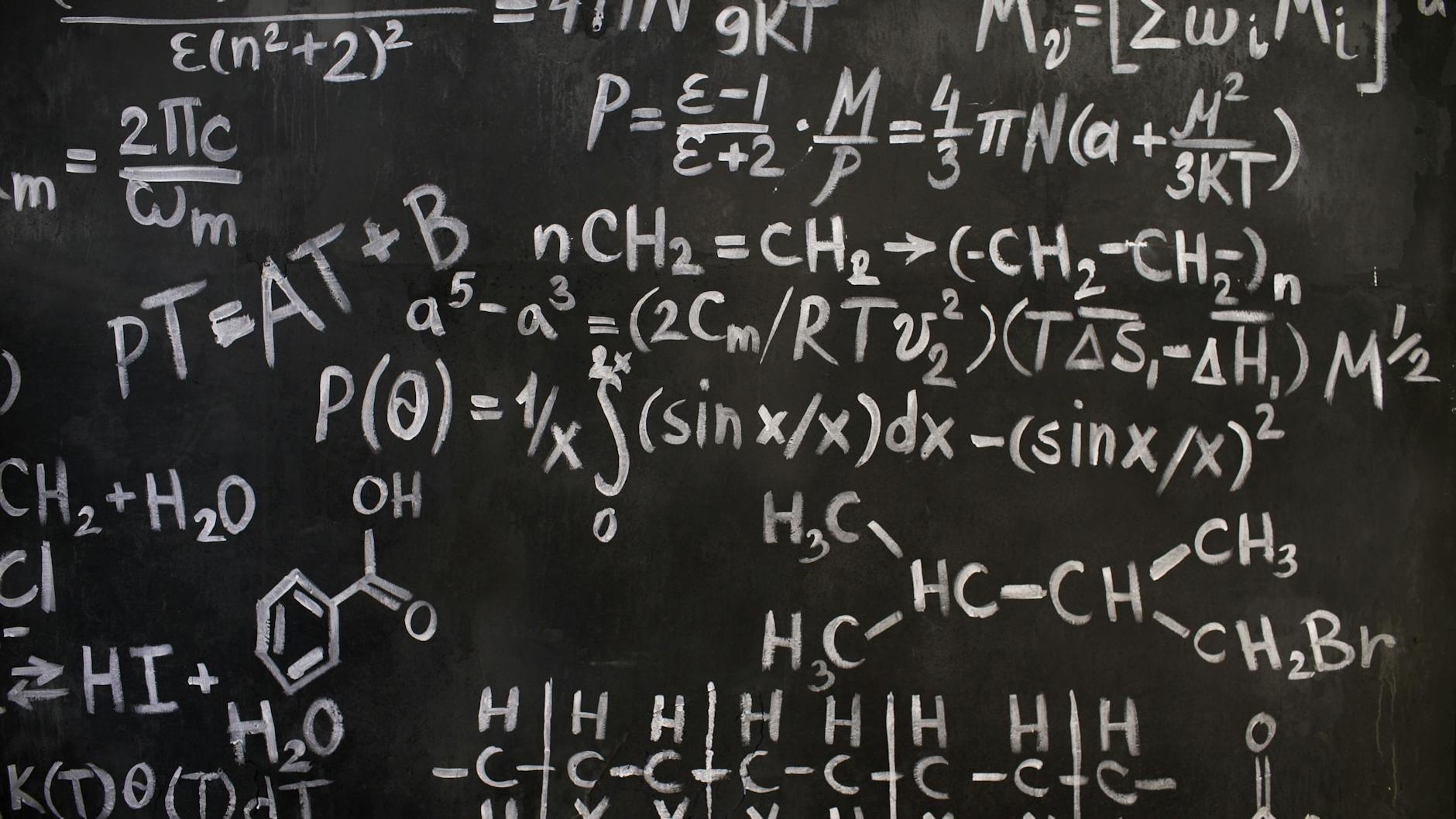
Mathematicians are discovering profound structural links between mathematical singularities and the legendary formulas of Srinivasa Ramanujan, according to a report by Quanta Magazine.
In 2011, mathematician Hussein Mourtada realized he could prove a deep underlying structure within singularities where curves cross or form sharp turns. This discovery confirmed a suspicion Mourtada had held since his doctoral studies: that these structures contain mysterious mathematical statements first recorded a century ago by Ramanujan.
Ramanujan, a self-taught genius from colonial India, died at the age of 32 after producing thousands of elegant results, many without formal proofs. He often claimed his equations were bestowed upon him by the gods.
A legacy of mathematical intuition
While Ramanujan worked in relative isolation in southern India, his 1912 correspondence with English mathematician G.H. Hardy brought him to global prominence. Hardy, a mathematical giant, famously quipped that his greatest contribution to mathematics was the discovery of Ramanujan.
Modern researchers are finding that Ramanujan’s work extends far beyond simple number theory. The outlet reported that mathematicians in the 1980s began finding connections between his partition identities—equations regarding how numbers are broken into smaller parts—and fields such as statistical mechanics, knot theory, and string theory.
These connections continue to emerge in disparate corners of mathematics, showing that the patterns Ramanujan sensed through intuition are fundamental to the study of symmetries and phase transitions.