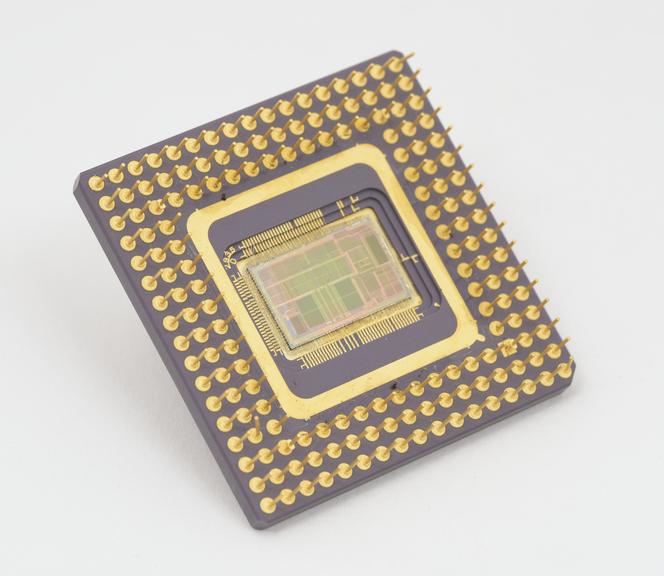
The Linux kernel community has confirmed that it is officially ending support for the Intel 486 processor. This decision marks the end of the road for the classic 1989 chip, which has enjoyed Linux compatibility for nearly three decades.
The Intel 486 processor once held a central place in the history of personal computing. However, as technology has evolved, the maintenance costs for the modern Linux kernel have risen significantly, making continued support for such antiquated hardware impractical.
Bidding Farewell to a Legacy Architecture
In the submitted patch notes, Linux kernel developers stated clearly that the processing power of the Intel 486 can no longer support the requirements of a modern operating system. Current kernel development is focused on optimizing for modern multi-core processors and high-performance hardware architectures; continuing to maintain the i486 not only consumes valuable development resources but also hinders the modernization of the kernel codebase.
While this change will have zero impact on the vast majority of modern users, it means that enthusiasts who still use vintage hardware for retro computing or embedded experiments will be forced to stick with older versions of the Linux kernel.
The Intel 486 series was the standard for mainstream PCs in the early 1990s, only being gradually phased out by the Pentium series around 1996. Although production lines were shut down 28 years ago, the Linux system had long maintained backward compatibility with the architecture thanks to the efforts of the open-source community.
This removal of support is part of a broader effort to streamline the Linux kernel. By cleaning out redundant code that is decades old, developers can more efficiently maintain the system’s stability and security.