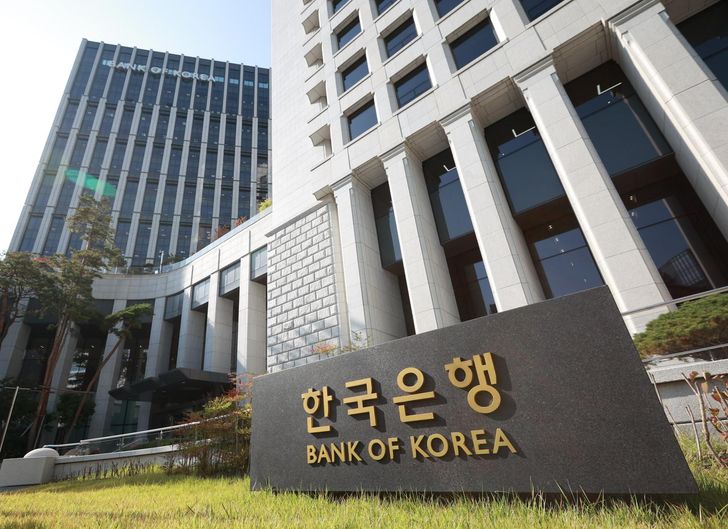
The Bank of Korea officially requested the implementation of stock-market-style circuit breakers on domestic cryptocurrency exchanges in its annual Payment and Settlement Systems Report, released April 13. The central bank suggests incorporating these mandatory trade-halting rules into the pending Digital Asset Basic Act to mitigate the impact of sudden price swings or abnormal order activity.
This policy recommendation follows a significant technical failure at the Bithumb exchange in February. An employee mistakenly entered a promotional reward unit as "BTC" instead of "KRW," effectively distributing approximately 60 trillion won—roughly $43 billion—in phantom bitcoin to users. While supervisors identified the error within 20 minutes, the resulting panic selling triggered a 17% price drop on the Bithumb platform.
Challenges of global liquidity
Regulators and financial experts remain divided on whether these mechanisms can effectively stabilize digital assets. Unlike traditional stock exchanges that operate within a closed ecosystem, cryptocurrency markets function continuously across hundreds of global venues. If a Korean exchange halts trading for 20 minutes, the underlying asset continues to trade on international platforms like Binance or Coinbase, potentially leaving the domestic price misaligned with the global market upon reopening.
"The harder question is whether halts would work, given the global nature of BTC trading," market analysts noted. While Upbit, Bithumb, and other licensed Korean exchanges already utilize high-speed matching engines with price collars and automated checks for "fat-finger" errors, the central bank argues that formal, industry-wide circuit breakers are necessary to maintain order.
Traditional finance uses circuit breakers as a visible signal of stability. For example, the CME Group pauses bitcoin futures trading for two minutes when prices move 10% within a 60-minute window. However, the decentralized nature of crypto assets complicates this approach. Because there is no single venue that dictates the global price of bitcoin, local halts may fail to prevent the volatility they are intended to suppress.