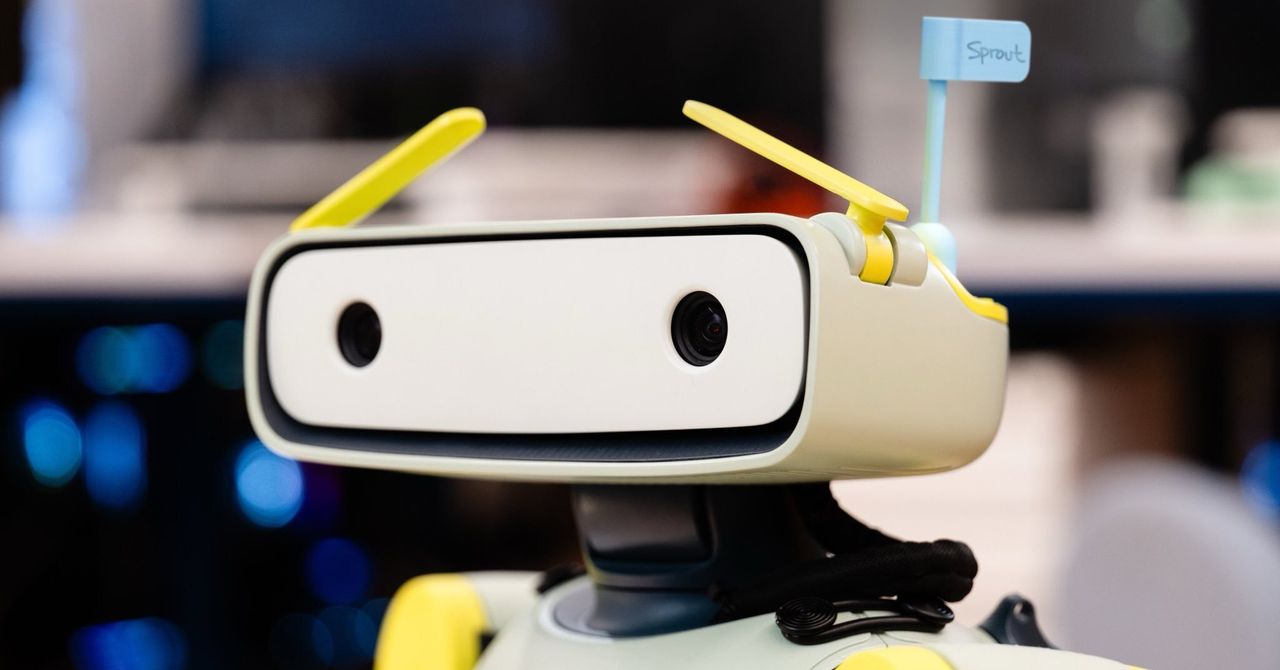
Meet Sprout: The $50K Robot Butler Ready to Transform Service Industry
The robotics industry is witnessing a fascinating pivot. While most companies chase the industrial automation dream, startup Fauna has unveiled Sprout—a $50,000 humanoid robot designed not for factory floors, but for bringing you a toothbrush when you need one most.Standing roughly the height of a 9-year-old, Sprout represents a strategic bet on service robotics that could reshape how we think about human-robot interaction. "We said, 'What if we could build something lightweight, engaging, and safe to be around, and capable enough to do some exciting things?'" explains Robert Cochran, Fauna's cofounder and CEO.The timing couldn't be more intriguing. America's humanoid robotics sector is experiencing unprecedented growth, with over a dozen companies—from Boston Dynamics to Tesla's Optimus project—racing to commercialize bipedal machines. Yet most are targeting manufacturing and logistics, leaving service applications largely unexplored.Fauna's approach differs fundamentally. Sprout comes equipped with mechanical eyebrows for emotional expression, software libraries for autonomous navigation and language processing, and teleoperation capabilities straight out of the box. The robot can scan environments, access large language models, and even recover from stumbles using proprietary balance technology.Early adopters include Disney, already familiar with theme park robotics, and Boston Dynamics itself. Research institutions like NYU are leveraging Sprout's programmable nature to advance robotic manipulation and human-robot interaction studies.During demonstrations, Sprout showcases capabilities that feel both futuristic and charmingly mundane. When asked to check a refrigerator's contents, the robot interpreted the natural language command, navigated autonomously, and reported back on the sodas inside—behavior Cochran likens to "a truculent 9-year-old."This intersection of AI advancement and robotics practicality signals broader industry trends. As computer vision systems developed for smart glasses mature, they're finding new applications in robots navigating human environments. Cochran, drawing from his Meta background alongside Google alumni on the founding team, sees this convergence as crucial.While Chinese manufacturer Unitree offers competing humanoids under $20,000, Sprout's $50,000 price point reflects its service-oriented design philosophy. Hotels are already in discussions about deploying these robot butlers, suggesting commercial viability beyond research applications."You can kind of get a 'Hello World' example of a robot where you can talk to and autonomously map and navigate its environment effectively," Cochran notes. "And from there, the world's your oyster."As the humanoid robotics market matures, Fauna's service-first approach may prove prescient. Rather than replacing human workers in factories, perhaps the real opportunity lies in augmenting human experiences in hotels, restaurants, and entertainment venues—one toothbrush delivery at a time.Source: Wired