FBI Probes Signal Groups Tracking ICE Operations in Digital Rights Clash
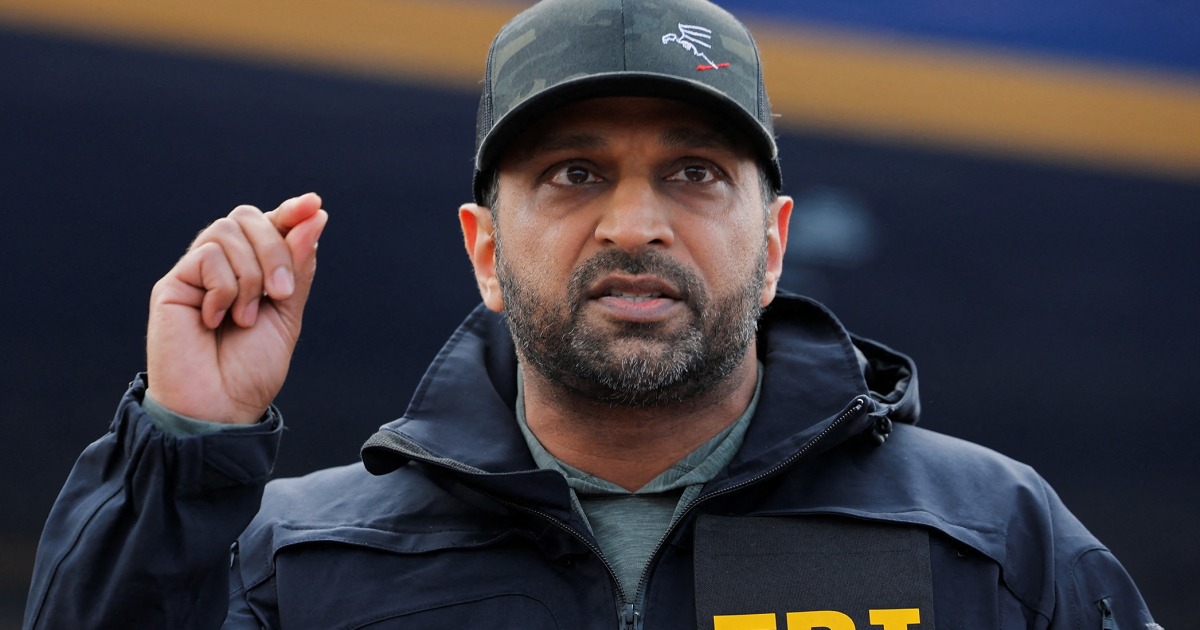
The intersection of digital privacy tools and immigration enforcement has reached a new flashpoint as FBI Director Kash Patel announced an investigation into Signal group chats used by Minnesota residents to track federal immigration agents' movements.In a Monday interview with conservative podcaster Benny Johnson, Patel revealed the bureau had opened an investigation into whether residents sharing agents' license plate numbers and locations had "put federal agents in harm's way." The probe emerged after conservative journalist Cam Higby claimed to have "infiltrated" Minneapolis Signal groups, generating 20 million views on social media."You cannot create a scenario that illegally entraps and puts law enforcement in harm's way," Patel stated, though he did not specify which federal laws may have been violated.The investigation immediately drew criticism from digital rights advocates who argue the First Amendment protects public information sharing. Aaron Terr, director of public advocacy at the Foundation for Individual Rights and Expression, emphasized that "there are legitimate reasons to share such information, including enabling members of the public to observe and document law enforcement activity."Signal, the encrypted messaging platform at the center of the controversy, has become a cornerstone tool for privacy-conscious users worldwide. The app's end-to-end encryption makes it virtually impossible for law enforcement to access message content without device-level access, highlighting the ongoing tension between digital privacy and law enforcement capabilities.In the Twin Cities, these digital coordination networks have evolved into sophisticated early-warning systems. Activists, parents, and neighborhood volunteers use Signal alongside walkie-talkies and whistles to alert families about Immigration and Customs Enforcement operations, particularly near schools where undocumented parents might be vulnerable.The technological cat-and-mouse game extends beyond Signal. Earlier this year, Apple removed the ICEBlock app from its store following administration pressure, prompting a lawsuit from developers who argue their First Amendment rights were violated. This pattern suggests a broader strategy to limit digital tools used to monitor federal enforcement activities.Legal experts warn that the investigation treads on constitutionally protected territory. Alex Abdo from the Knight First Amendment Institute at Columbia University noted that "the ability of everyday citizens to hold government agents to account, by observing them and advocating for change, is what has distinguished the American experiment with democracy from authoritarian regimes."Patel acknowledged the First Amendment implications but claimed the FBI would "balance" constitutional rights against potential federal violations. However, constitutional scholars reject this framing. "The government does not get to 'balance' the First Amendment against its other interests," Terr emphasized.The probe also intersects with broader questions about encrypted communications and law enforcement access. While Signal's technical architecture prevents easy surveillance, the investigation highlights how metadata and behavioral patterns can still draw federal scrutiny.Beyond the immediate legal questions, this case represents a microcosm of how digital tools are reshaping civic engagement and government accountability. As federal agencies increasingly rely on technology for enforcement, citizens are deploying the same tools to monitor and respond to government actions.The investigation's outcome could establish important precedents for digital privacy rights and the boundaries of legitimate government surveillance in an era where encrypted communications are becoming standard for privacy-conscious citizens worldwide.Reporting based on NBC News coverage by David Ingram.