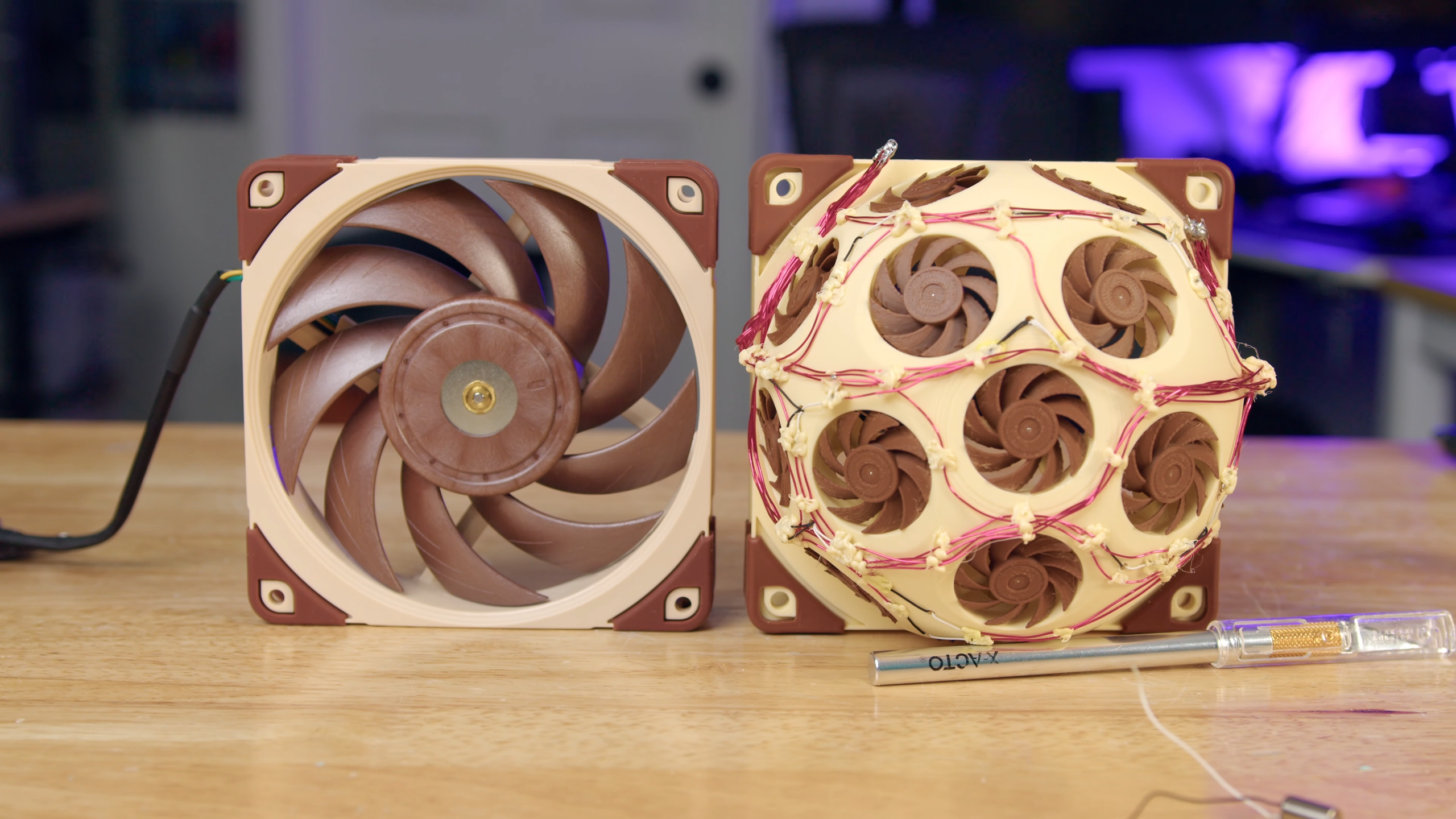
YouTuber Major Hardware recently conducted an unconventional cooling experiment designed to challenge standard PC hardware norms found in modern desktops. The project involved replacing one single high-performance fan unit with 15 miniature cooling fans assembled into one custom housing unit. According to reports from PC Gamer, the primary goal was to determine if aggregate airflow could match a high-performance model. The video detailing this process was released to a dedicated following of hardware enthusiasts interested in DIY modifications and technical builds.
The inspiration for the build originated from a toy flying UFO seen on the creator’s children’s play table during a recent afternoon. Major Hardware observed that the small motors generated significant wind despite their diminutive physical size and low power consumption. 15 of these 30-millimeter units provided a surface area comparable to a standard 110-millimeter Noctua fan used in high-end builds. All components were powered by a 5V supply similar to the original toy mechanism and power supply.
Engineering the device required significant modification of the original Noctua A12x25 base structure to accommodate the dense array of motors. The team utilized a precise CAD model of the original fan to design a plastic dome for the assembly and mounting points. Initial prototypes suffered from cracked motor mounts due to excessive vibration, which the second iteration successfully resolved with antivibration pads. The final structure was printed using standard PLA material for rigidity and aesthetic finish.
Operational testing revealed an auditory challenge that defines the project entirely and outweighs the minimal performance gains realized. Major Hardware described the noise level as sounding like a bunch of angry bees upon initial activation of the system. Decibel measurements registered at 73, which aligns with the sound of a running dishwasher or a typical home vacuum cleaner. This noise level exceeds standard quiet mode thresholds by a significant margin of safety.
Thermal performance remained largely consistent between the custom build and the commercial alternative during rigorous stress testing conditions. An Intel Core i7 7700K processor reached 69.5 degrees Celsius during a 20-minute stress test under standard ambient conditions. The custom unit achieved a temperature of 69 degrees Celsius, a fractionally lower reading that remains within the margin of error. Power consumption levels remained stable throughout the duration of the benchmark session and idle state.
This experiment highlights the extreme lengths some DIY enthusiasts will go to for hardware optimization and entertainment purposes within the community. While the cooling efficiency proved technically superior, the acoustic penalty renders the design impractical for daily computing tasks in quiet rooms. Comments on the original video suggested renaming the endeavor The Fanhattan Project to reflect the complexity and effort involved. The channel has garnered millions of views from users seeking similar builds and projects.
Commercial cooling solutions prioritize a balance between noise reduction and thermal dissipation to ensure user comfort in quiet home environments. Manufacturers like Noctua focus on reducing vibration while maintaining high static pressure for efficient radiator cooling performance across systems. This project demonstrates how simple aggregation of small components fails to replicate engineered fluid dynamics found in larger, specialized fans. Industry standards typically require noise levels below 25 dBA for premium units and enthusiasts.
Future iterations of this concept might benefit from active vibration damping systems to mitigate the excessive noise levels generated by the array. Tech consumers should prioritize established brands unless they seek novelty over utility in their specific gaming or workstation builds today. The tech community continues to explore unconventional hardware modifications for entertainment and educational purposes within the hobbyist sphere. Such experiments often spark discussion about the limits of consumer electronics design innovation.