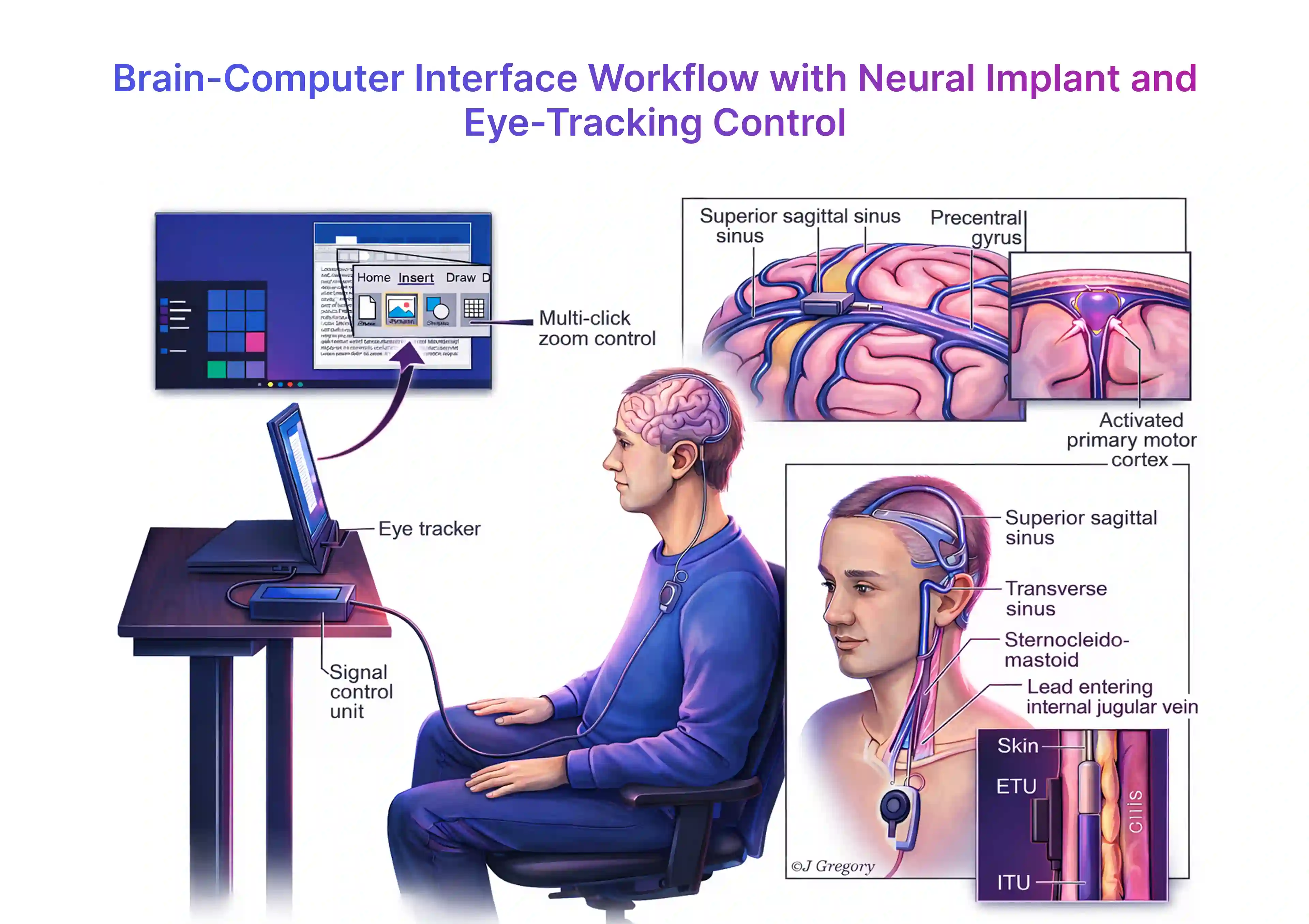
Neuralink is quietly expanding its brain-computer interface (BCI) research to prioritize speech restoration technology, signaling a potential shift in strategy for the Elon Musk-led company. While Neuralink previously focused on systems that allow users to control computer cursors with their minds, the company is now contending with competitors who have made rapid progress in translating neural activity directly into human speech.
The pivot arrives as scientific reality challenges the original, ambitious goals Musk set for the startup. While Neuralink has successfully implanted chips in human subjects to facilitate motor control, the field as a whole has seen more immediate, practical success in speech-based interfaces.
The shift from motor control to communication
All BCIs function by detecting electrical signals from neurons and translating them into digital outputs. However, the application of that data varies significantly between motor and speech devices. Motor BCIs, such as those initially developed by Neuralink, interpret signals intended for limb movement to guide a cursor on a screen. Speech BCIs, conversely, translate brain waves into phonemes and words.
Recent years have demonstrated the efficacy of the speech-focused approach. In 2024, researchers reported that an ALS patient achieved 97 percent accuracy using a speech BCI to communicate naturally. These results have emerged over a five-year window, rivaling performance metrics that took two decades to achieve in the motor BCI field.
Neuralink’s current motor-based technology requires patients to visualize physical movement to trigger a digital response. For example, a patient with ALS might attempt to move an arm they can no longer control, which the software then interprets as a command to move a computer mouse. Speech BCIs operate on a similar neurological foundation, as the brain sends signals to the tongue and throat muscles during speech in a manner analogous to limb movement.
Industry analysts note that Musk’s broader vision of merging human cognition with artificial intelligence often simplifies the complex physiological constraints of brain interfaces. By focusing on speech, Neuralink is moving toward a more specialized application that addresses immediate patient needs. The company now faces the challenge of closing the gap with competitors who successfully turned neural decoding into fluid, real-time communication for patients with severe motor impairments.