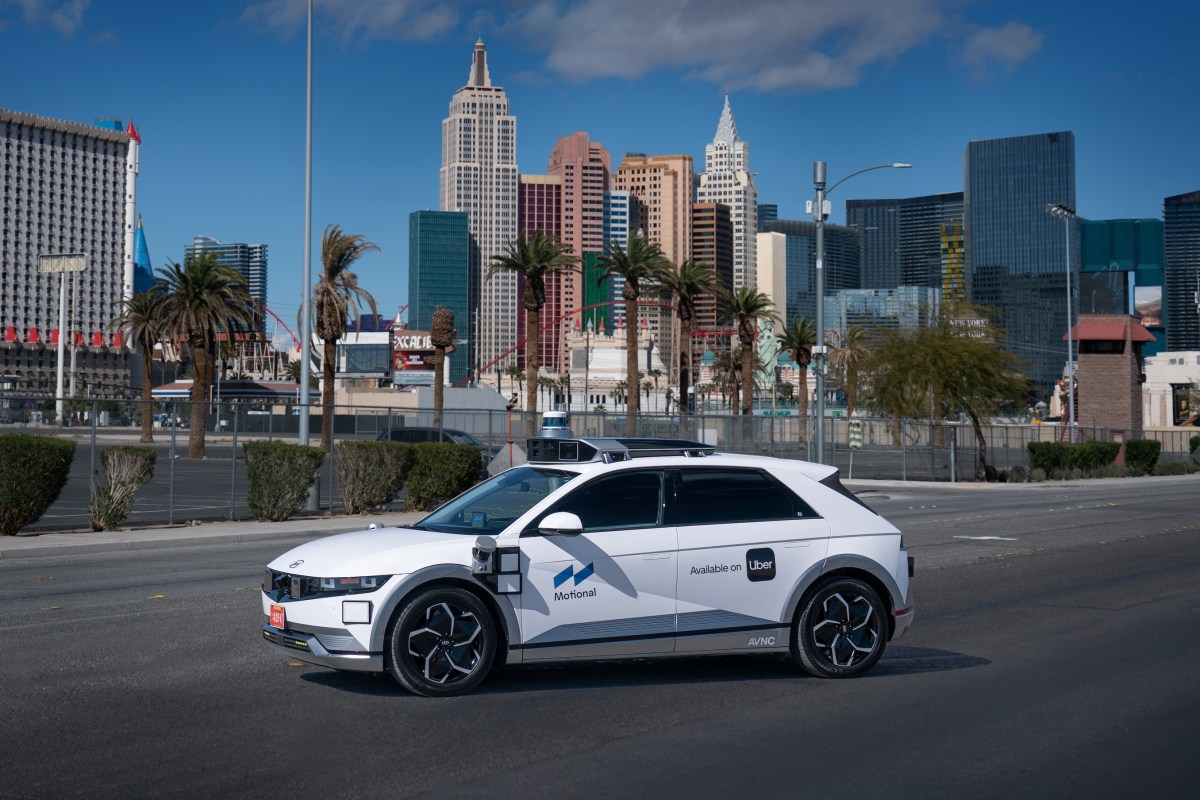
Hyundai-owned Motional has officially integrated its autonomous vehicles into the Uber application in Las Vegas this Friday. This launch marks a significant step forward for the company less than two years after a major financial restructuring. Rides became available on Friday across five designated zones in the city to test the technology. The service aims to demonstrate the viability of self-driving taxi networks alongside human drivers in a high-density area.
Customers can request rides to and from Resorts World, Encore, Westgate, Town Square, and Downtown Las Vegas today. The fleet consists of Hyundai Ioniq 5 vehicles equipped with Level 4 autonomy hardware and advanced sensors. A safety monitor remains inside each vehicle during this initial phase to ensure passenger security and compliance. Users enable autonomous vehicle pickup in the app to increase match probability with these specific units.
Both companies plan to expand the operating area beyond the current zones in the coming months according to officials. However, specific details regarding the next phase of deployment remain undisclosed at this time by spokespeople. The primary goal is to transition to a fully driverless operation by the end of the calendar year. This milestone would signify a major shift in how the technology handles public interaction without intervention.
The partnership represents a turnaround for Motional, which faced existential challenges two years ago during its inception. Created as a joint venture between Hyundai and Aptiv, the startup struggled to meet its initial launch targets with Lyft. Aptiv subsequently withdrew from the funding agreement, forcing Hyundai to assume full financial responsibility for the project. This decision required a substantial investment to keep the autonomous vehicle program alive and solvent.
Following the funding injection, the company executed a severe restructuring plan that reduced its workforce by approximately 40%. Leadership also pivoted its technology stack to rely more heavily on neural networks and advanced AI models. This strategic shift aimed to solve the scalability issues that plagued earlier generations of their software stack. The move positioned the firm to compete more effectively in the rapidly evolving AV sector against Tesla and Waymo.
Laura Major, the president and chief executive officer, addressed the changes during a presentation at the 2026 Consumer Electronics Show in January. She stated that the pause in commercial activities was necessary to accelerate development of affordable solutions for mass adoption. Major noted that while their previous system was safe, it lacked the generalization required for global scaling across different climates. The company now believes this new approach will bridge the gap between safety and cost efficiency.
Since the pivot, Motional has operated a limited service for internal employees and conducted demo drives at major tech conferences. These trials have generated positive feedback regarding the stability of the new autonomous stack and navigation capabilities. The transition from internal testing to public ride-hailing marks a critical validation of their revised strategy. Success in this market segment is crucial for future investor confidence and long-term sustainability.
For Uber, Motional adds to a growing network of autonomous vehicle partners that now exceeds 25 companies globally. The ride-hailing giant continues to sign deals with various startups to diversify its technology base and reduce costs. Recent announcements include integrating Nissan Leaf EVs in Tokyo powered by Wayve and Zoox robotaxis locally later this year. Uber seeks to reduce reliance on human drivers while maintaining service availability across different regions and times.
The integration highlights the ongoing challenge of scaling autonomous ride-hailing services in complex urban environments with heavy traffic. Regulatory hurdles and public trust remain significant factors for widespread adoption of these technologies in major cities. Industry observers will watch closely to see if the safety monitor can be removed without increasing incident rates significantly. The outcome could influence investment strategies for other autonomous vehicle startups in the near future.
Motional intends to remove the safety monitor from its fleet by the end of the year if performance metrics remain stable and safe. Continued expansion of the operating zone will test the robustness of the system under real-world conditions and weather. Success in Las Vegas could pave the way for entry into other major metropolitan areas with similar regulatory frameworks. The next two months will determine if this reboot achieves long-term commercial viability and profitability.