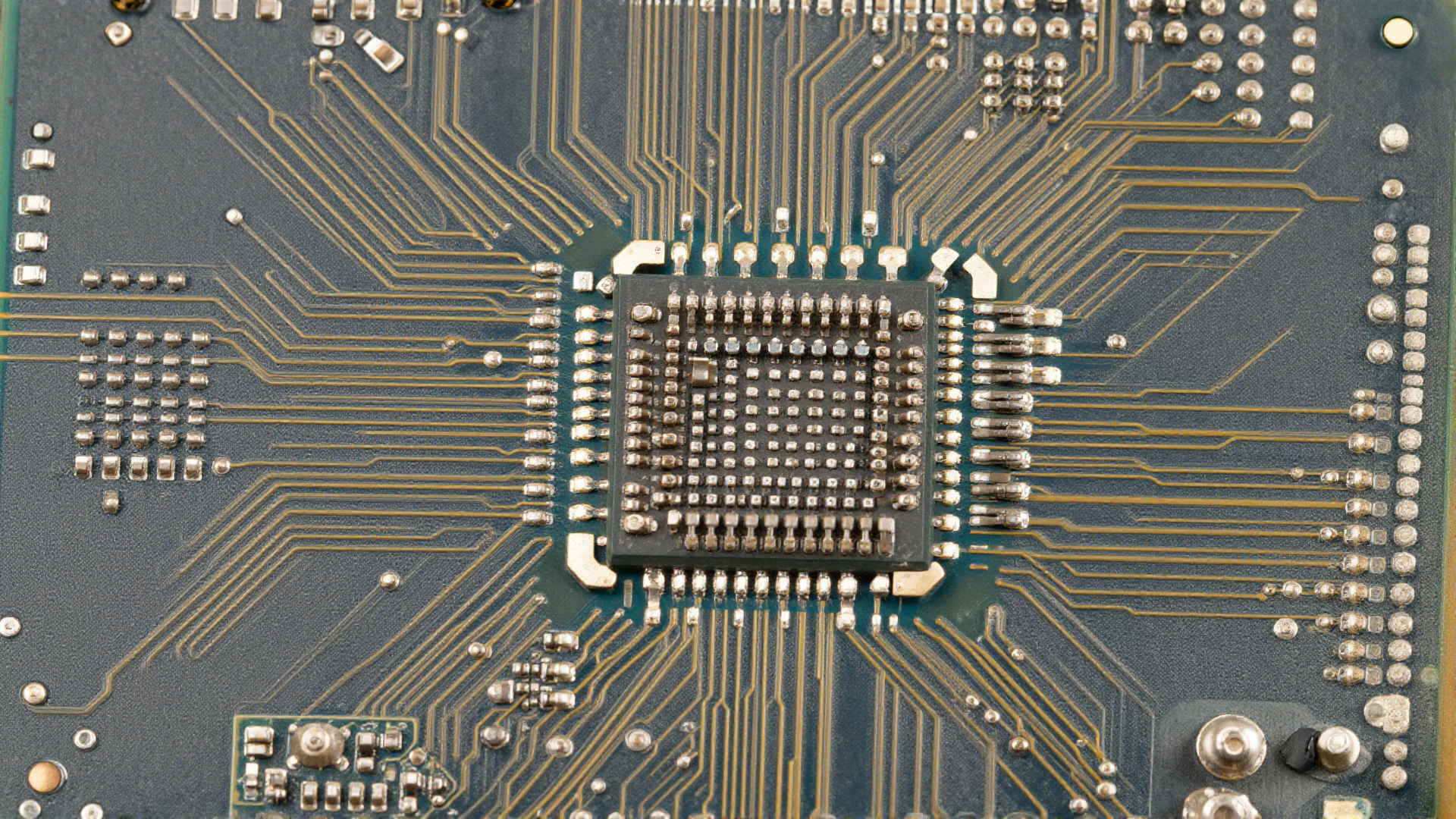
Hardware designer Hugh Huang has introduced the BIO I/O coprocessor, a new component designed for the Baochip-1x system-on-chip. This open-source hardware initiative aims to solve determinism issues found in existing I/O co-processing solutions. The design leverages modified RISC-V architecture to offer better resource efficiency than current market standards.
Huang studied the Raspberry Pi PIO extensively before finalizing the BIO specifications. He noted that while the PIO is flexible, it consumes disproportionate logic resources when implemented in field-programmable gate arrays. In one specific test case, the PIO core occupied more than half the FPGA area despite its simple instruction set. Timing analysis revealed that the critical path was two times as slow as the main CPU core, limiting clock speeds to 50MHz.
The inefficiency stems from complex barrel shifters required to handle pin mapping options within one clock cycle. Huang explained that the logic area consumed by shifters often exceeds that of the state machine itself. This architectural choice creates timing closure problems that slow down the overall system performance significantly. A single instruction can manipulate data rotation and FIFO thresholds simultaneously, adding substantial logic overhead.
Legal concerns also influenced the decision to design a new processor rather than cloning the existing solution. Huang reported that at least one patent appears to encumber the PIO technology. He advised developers to consider the risks of incorporating reference code into commercial products due to potential infringement issues. The Raspberry Pi Foundation has signaled they do not welcome open source re-implementations.
The BIO utilizes a compact PicoRV32 core configured as an RV32E variant to reduce register count and physical footprint. This approach aligns with a RISC philosophy that prioritizes simple designs over custom instruction complexity. Engineers gain access to established RISC-V software tooling without sacrificing hardware performance. The resulting silicon footprint is significantly smaller than comparable proprietary blocks.
A unique feature of the BIO involves mapping 16 unused registers to queues with blocking semantics. This technique originates from the ADAM architecture Huang developed during his doctoral studies. The queues allow cores to pause execution until I/O resources become available, ensuring deterministic timing. This mechanism eliminates the need for software polling loops that waste processor cycles and introduces latency.
The register map exposes 16 standard read-write registers alongside 16 specialized queue registers. These specialized registers enable synchronization primitives that manage data flow between processors and I/O peripherals. This structure prevents wait states that typically plague multi-core bus architectures. It effectively creates a hardware-level handshake protocol between cores and memory.
Debugging capabilities represent another significant advantage over proprietary implementations. Huang highlighted that developers can verify PIO code using Verilator simulations before silicon fabrication. This reduces the development cycle time and increases confidence in hardware reliability. The ability to simulate cycle-accurate behavior allows for thorough testing of edge cases.
The evaluation board for the Baochip-1x is available for purchase through Crowd Supply. This accessibility allows the open-source community to test the BIO in real-world applications immediately. The move signals a continued commitment to transparent hardware development practices. Users can access the full source code repository to inspect the implementation details.
Industry observers note that hardware efficiency is becoming a critical factor in embedded system design. As power constraints tighten, architectures that minimize logic area become increasingly valuable. The BIO demonstrates how software-friendly hardware can achieve hardware-like determinism. This approach could influence future open-source semiconductor projects seeking similar performance gains.