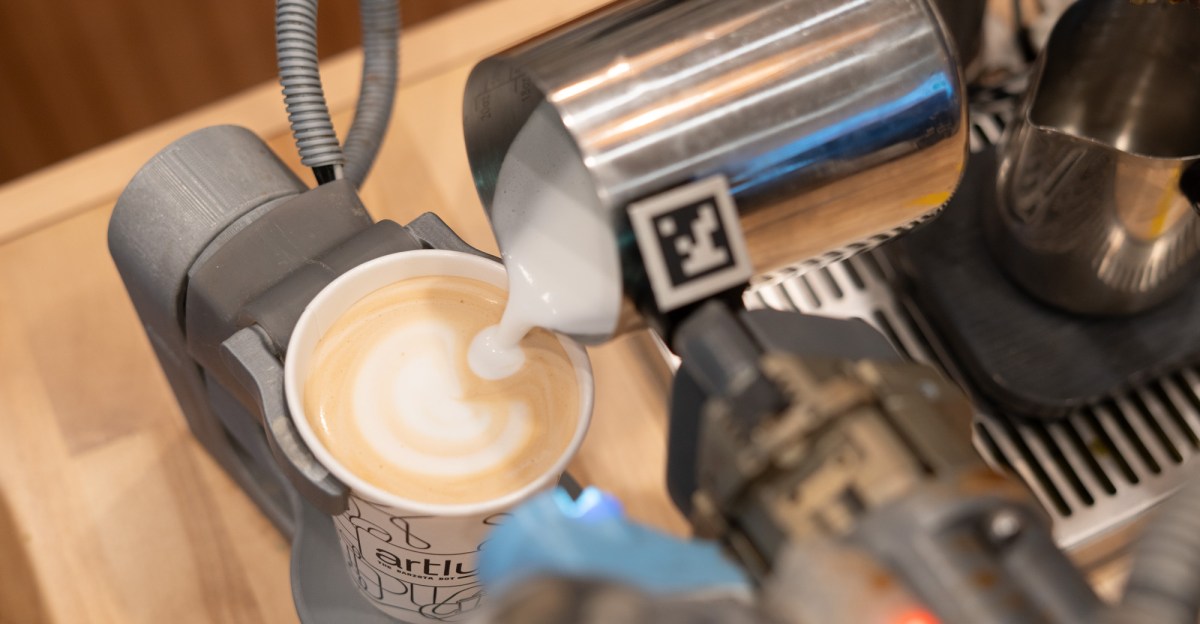
In Seattle, a city renowned for its coffee culture, a robotic barista named Jarvis is serving lattes inside the Hill7 luxury apartment building lobby, challenging the perceived necessity of human touch in specialty beverage preparation. This installation, developed by Seattle-based Artly, utilizes a robotic arm integrated with a customized La Marzocco espresso machine to execute complex drink preparation.
Jarvis is neither a simple vending machine nor a full humanoid robot; rather, it is a sophisticated robotic arm trained on the precise movements of US Coffee Championship winner Joe Yang, Artly’s head of coffee. The system takes approximately three minutes per drink and employs onboard AI to self-correct for minor issues, such as reporting when a portafilter lacks grounds.
Reports indicate that the quality of the output—including lattes featuring properly steamed milk achieving a 'wet paint' microfoam texture—is consistently good to very good. This performance often surpasses drinks received at non-specialist human-operated cafes, according to the correspondent’s comparative experience.
Despite the advanced automation, human involvement remains critical for operational continuity, as observed at an Artly location near Pike Place Market where human staff refilled milk tanks and cleaned spills. The human Artly employees primarily monitor the robotic arms, which include others named Amanda and Ponyo, while the robots operate on a loop when idle.
The deployment of such automation addresses significant pain points for small business owners, specifically the challenges associated with staffing, training, and managing human employees. The correspondent noted the high physical and managerial demands placed on owners in traditional service environments.
This technological push occurs as larger entities, like Starbucks, rationalize their physical footprint, exemplified by the recent closure of its Reserve Roastery location in the same city, citing poor financial performance in that specific physical environment.
Artly’s robotic solution represents a calculated move toward standardizing high-skill service tasks, potentially offering a consistent, reliable alternative to the variable performance inherent in human labor, particularly in high-cost urban centers like Seattle.