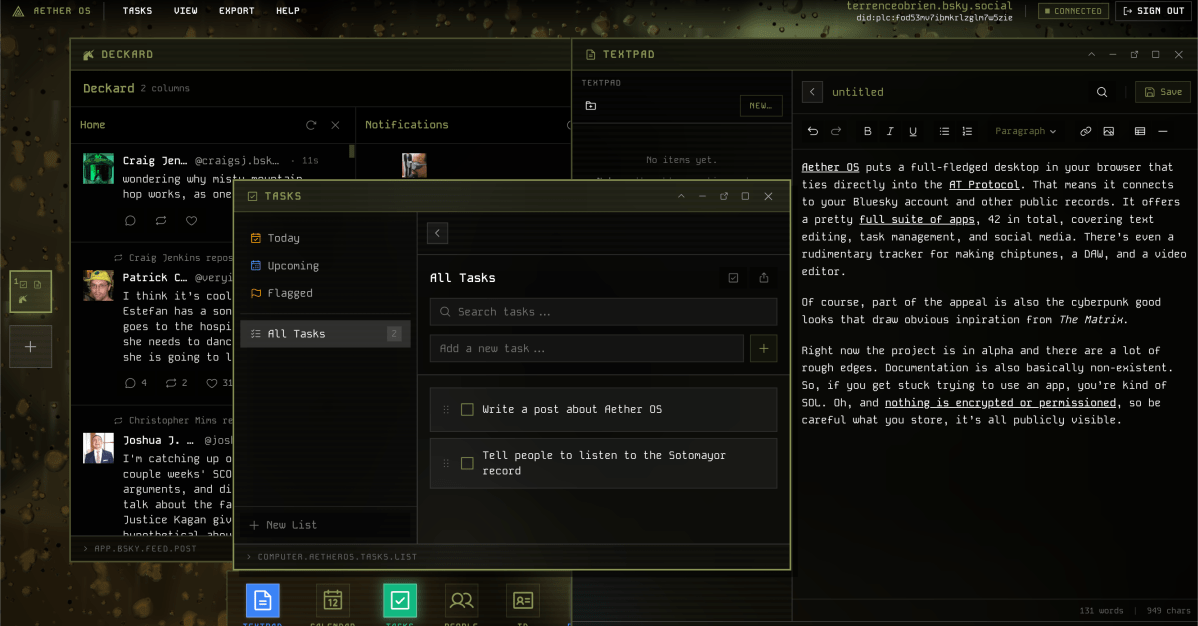
Aether OS introduces a full desktop environment running entirely within a standard web browser. This system integrates directly with the AT Protocol used by the decentralized social network Bluesky. The project aims to merge traditional operating system functionality with open social networking standards. It represents a significant shift in how users interact with cloud-based computing resources.
Users can access 42 applications ranging from basic text editing to complex video editing tools. The suite includes task management tools and even a rudimentary digital audio workstation for chiptunes. This breadth of functionality allows for productivity work directly within the browser session. Developers have prioritized utility alongside the experimental nature of the platform.
Visual design draws heavy inspiration from The Matrix with distinct cyberpunk aesthetics. The interface prioritizes immersion over standard utility design conventions found in modern browsers. This stylistic choice targets users interested in alternative internet cultures and retro computing. The neon color palette reinforces the cyberpunk theme throughout the navigation system.
The platform currently exists in an alpha stage with significant rough edges and performance issues. Documentation remains minimal, leaving users without clear guidance for troubleshooting specific errors. Navigating the system requires patience and technical familiarity with beta software releases. Early adopters should expect bugs and instability during daily operations.
Security protocols lack encryption and permissioning controls for stored data within the system. All information posted to the network remains publicly visible on the decentralized ledger. Users must exercise caution regarding sensitive data storage within this open environment. Privacy settings do not restrict access to the public records by default.
This release highlights the growing trend of decentralized operating systems outside major tech corporations. Traditional cloud desktops rely on centralized servers owned by companies like Google or Microsoft. Aether OS shifts this model to align with the open standards of the AT Protocol ecosystem. It challenges the dominance of proprietary software vendors in the desktop market.
Integration with public records allows for seamless identity verification across the network. Users link their Bluesky accounts to authenticate sessions without traditional password systems. This reduces friction while maintaining the underlying security of the decentralized web. Account ownership transfers directly with the user's identity on the protocol.
The Verge reported on the initial launch and noted the impractical nature of the project for enterprise use. Reviewers acknowledge the fun factor despite the lack of immediate commercial utility. The project serves as an experimental proof of concept for future web standards. It demonstrates the potential for browser-based OS architectures to function independently.
Future development will likely focus on stabilizing the application suite and improving documentation quality. Community feedback will drive the roadmap for the next major release cycle effectively. Developers are expected to prioritize security enhancements in upcoming iterations of the software. Updates will address the current lack of encryption for user data.
This evolution marks a significant step toward browser-native computing environments for the general public. Adoption depends on whether users value decentralization over current stability standards for daily tasks. The tech industry watches closely to see if this model gains traction beyond early adopters. Success could influence how major platforms approach cloud desktop integration.