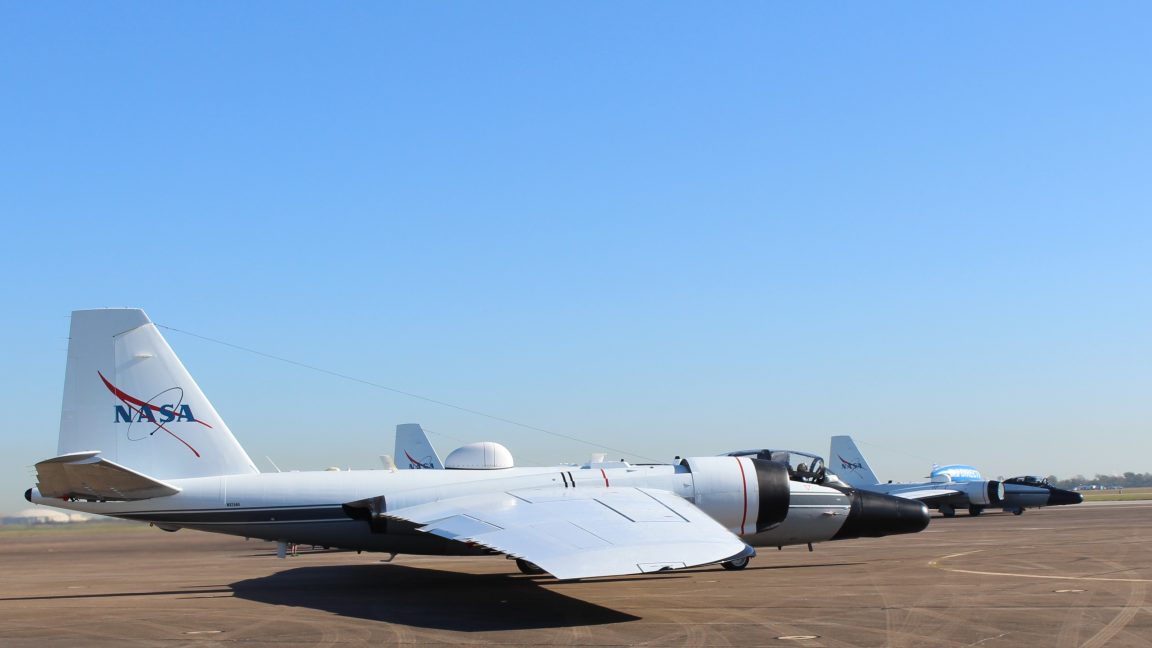
One of the three operational WB-57 aircraft maintained by the National Aeronautics and Space Administration (NASA) executed an emergency landing at Ellington Field in southeastern Houston on Tuesday. Video evidence captured by local news outlets depicted the high-altitude platform touching down without deploying its landing gear.
NASA spokesperson Bethany Stevens confirmed the incident, stating that a mechanical issue precipitated the gear-up landing at the Houston-area facility. She further assured the public that response efforts were underway and that all crew members were safe following the event.
This specific airframe, a variant of the B-57 lineage, is utilized by NASA for specialized atmospheric research missions. The aircraft is capable of reaching altitudes up to 62,000 feet, historically supporting tasks like weather reconnaissance and sampling the upper atmosphere for nuclear debris.
The B-57 design originates from the English Electric Company’s development work dating back to 1944, with the United States Air Force adopting the platform later to replace older aircraft. The WB variant features extended wings optimized for high-altitude performance, a capability that remains critical for current scientific payloads.
Following the incident, NASA indicated that a comprehensive investigation into the root cause of the landing gear malfunction would commence immediately. The agency stated it would provide transparent updates to the public as more information becomes available from the inquiry.
The pilot demonstrated exceptional airmanship in maintaining control of the jet as it decelerated along the runway surface, relying on friction to slow the momentum after the belly landing. This outcome underscores the rigorous training associated with operating these unique, legacy research platforms.
This event highlights the operational risks inherent in maintaining and flying specialized, decades-old aircraft used for cutting-edge atmospheric science. The successful emergency procedure averted potential damage to the airframe and ensured crew safety.