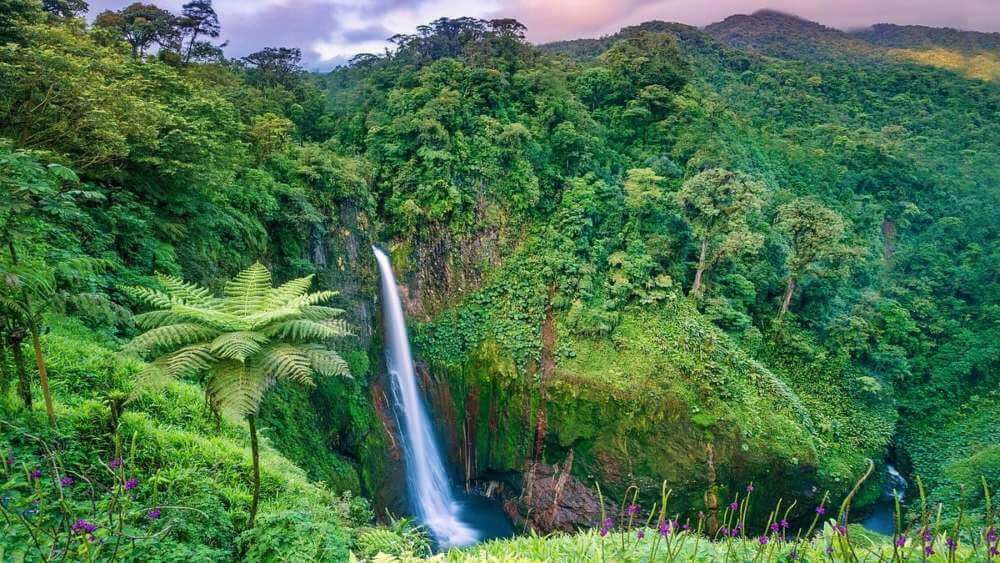
On a barren stretch of pasture in Costa Rica, a waste-management experiment that began in 1997 has yielded stunning ecological results long after it was abandoned. At the time, Princeton University researchers Daniel Janzen and Winnie Hallwachs struck a deal with a local juice producer, Del Oro: the company could dump its orange peel waste on the degraded land in exchange for donating a portion of its property to the Area de Conservación Guanacaste.
Over the following period, approximately 12,000 tons of orange peels—delivered by 1,000 truckloads—were dumped onto the virtually lifeless soil. These nutrient-rich organic leftovers rapidly improved the soil's fertility. Timothy Treuer, an ecologist at Princeton, noted that within about six months, the peels had transformed into a rich, dark layer of humus.
However, the ambitious project was abruptly halted the following year due to a legal challenge from a competitor. The court ruled that the dumping had "polluted a national park," and the experiment was forced to end. The site was subsequently forgotten for 15 years. It wasn't until 2013 that Treuer decided to re-examine the site during a field visit. Because the area had transformed into a dense jungle—with even the original marker signs completely swallowed by vines—it took the research team several attempts to finally locate the spot.
A Wasteland Reborn
Comparisons revealed that the area treated with orange peels far outperformed the untreated control plots in terms of soil fertility, biomass, and tree species diversity. One fig tree had grown so thick that it required three people to wrap their arms around its trunk. Treuer believes this was not only a win-win for the company and the park but also a significant contribution to the environment.
"This is the only case I’ve ever heard of that achieves 'negative-cost carbon sequestration,'" Treuer stated. He speculates that the orange peels likely suppressed invasive grasses while providing essential nutrients to the severely degraded soil, creating a synergistic effect that jump-started the restoration process.
While the exact mechanisms by which the orange peels accelerated forest regeneration are not yet fully understood, the success of this experiment offers a fresh perspective on ecological restoration. Researchers hope that this method of using nutrient-dense waste to rehabilitate barren land can be applied in other regions, allowing for the dual benefit of managing industrial waste while capturing more carbon from the atmosphere through forest regrowth.