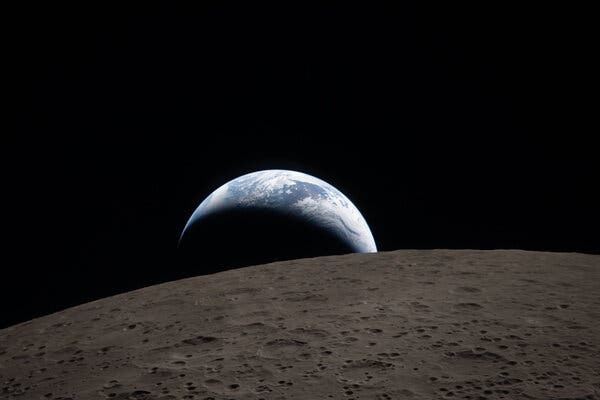
The astronauts of the U.S. Artemis II mission have completed their lunar flyby, successfully navigating around the far side of the moon and officially breaking the record for the farthest distance from Earth ever reached by humans—a record previously held by Apollo 13. The mission is currently proceeding as planned, with the crew expected to re-enter Earth's atmosphere on April 10.
During the mission, the camera systems aboard the Artemis II spacecraft captured a wealth of extraordinary footage. According to images released by NASA, the crew witnessed a total solar eclipse lasting 54 minutes. With the moon completely obscuring the sun, stars that are usually impossible to see while photographing the lunar surface became clearly visible, and the solar corona appeared as a glowing halo around the moon. NASA noted that this unique vantage point provided an exceptional opportunity for the astronauts to document the corona.
In a broadcast from the Orion spacecraft, one astronaut remarked, "The view from the moon right now, just with the naked eye, is absolutely breathtaking." To commemorate this deep-space milestone, veterans of the Apollo missions sent recorded greetings to the Artemis II team, including a message from the late Apollo 13 commander, Jim Lovell.
Budget Cuts Spark Concern in the Scientific Community
Despite these historic breakthroughs in space exploration, NASA’s future funding faces a severe test. As reported byThe Register, while the U.S. government was celebrating the success of Artemis II, it simultaneously unveiled its fiscal year 2027 budget proposal on April 7, 2026, which includes significant cuts to NASA's budget.
This proposal has sent shockwaves through the scientific community. Critics argue that the plan represents an "existential threat to American leadership in space science and exploration." Meanwhile, life in space hasn't been entirely seamless for the crew; during a live connection, one astronaut joked, "I have two Microsoft Outlook accounts, and neither of them is working properly right now."
Artemis II is expected to break free from the moon's gravitational pull this Tuesday. Once the astronauts return safely to Earth, mission control will officially celebrate this milestone. However, the White House's proposed budget cuts have cast a long shadow over the future of deep-space projects.