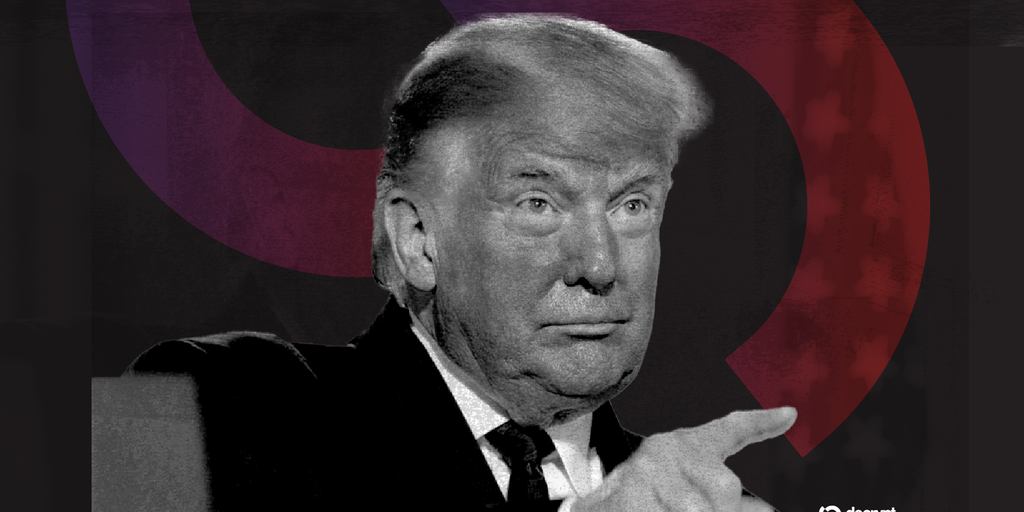
President Trump announced 13 new members for his President's Council of Advisors on Science and Technology on Wednesday. The lineup includes heavy hitters from Silicon Valley and notable representatives from the cryptocurrency industry. This move signals a strategic focus on artificial intelligence and emerging technologies during his administration.
Prominent figures among the appointees include Jensen Huang, Mark Zuckerberg, Sergey Brin, and Lisa Su. The council will be co-chaired by David Sacks, Trump's AI and crypto czar, and former U.S. Chief Technology Officer Michael Kratsios. The group aims to advise the President on keeping the United States ahead of global competitors.
Crypto has a seat at the table with Coinbase co-founder Fred Ehrsam and a16z's Marc Andreessen on the council. Their presence marks a significant shift in how digital assets are discussed at the highest levels of government. The goal is to ensure all Americans thrive in the Golden Age of Innovation.
Market Resilience and Institutional Adoption
In markets, Circle stock rebounded after a sharp selloff, with analysts calling the reaction overdone. "Don't conflate stablecoin issuer with distributors like Coinbase," Bernstein said. Ark Invest purchased 161,513 shares of CRCL across three ETFs on Tuesday.
Whop launched Whop Treasury this week to offer yield on idle balances directly within its platform. The product integrates Aave, Plasma, and Tether to provide up to six% APY for users. This move brings DeFi liquidity to 21 million creators who have never interacted with on-chain protocols before.
Google published a formal 2029 timeline to transition its entire infrastructure to post-quantum cryptography. The company cites the threat as closer than it appears and plans to integrate ML-DSA in Android 17. IBM has also targeted fault-tolerant quantum systems by the same year.
Bitcoin ETFs pulled in nearly 2.5 billion dollars over the past month, nearly erasing all year-to-date outflows. Bloomberg Intelligence analyst Eric Balchunas called the fortitude "incredible" in the face of price drawdowns. IBIT has already flipped positive for the year and ranks in the top two% of all ETFs by YTD flows.
Implications for Future Policy
These developments highlight a growing convergence between traditional tech giants, crypto innovators, and government policy. The appointments suggest a framework for regulating AI and blockchain that prioritizes innovation alongside security. Investors and policymakers will watch closely as these initiatives unfold.