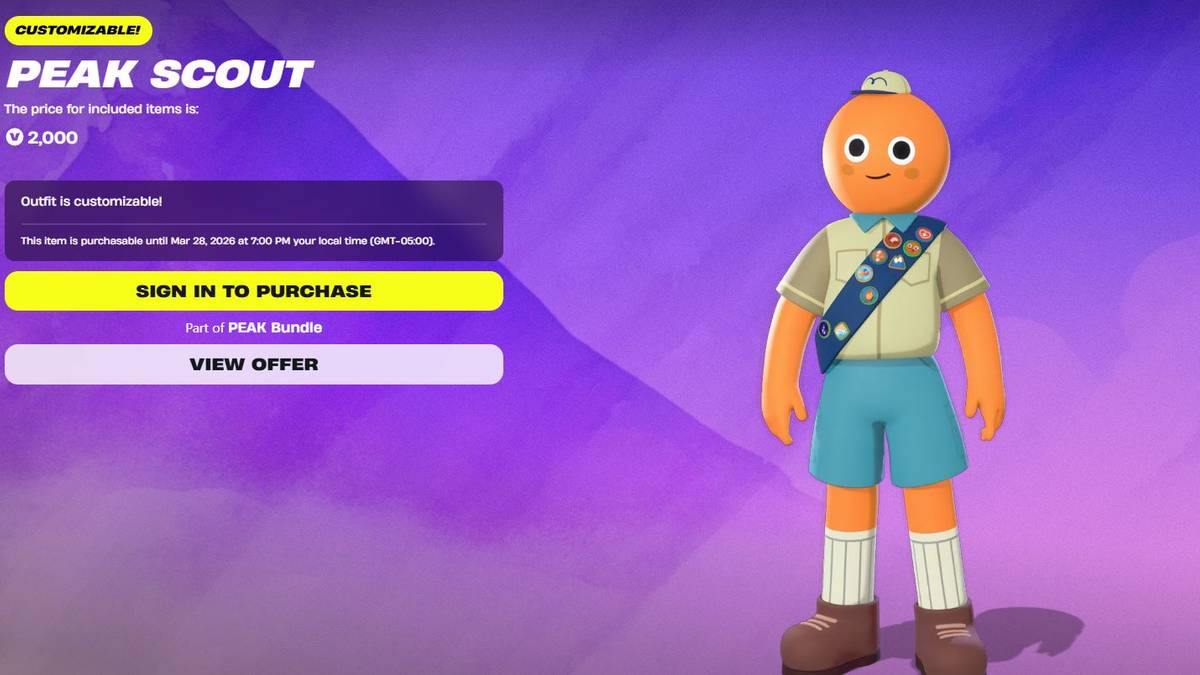
Fortnite players loading the shop this week encountered a controversial price tag for a cosmetic based on the Steam hit Peak. The basic costume costs 2,000 V-bucks, which translates to approximately 20 dollars in real currency. This single item costs significantly more than the entire game it references.
Peak, developed by Aggro Crab, retails for seven dollars and 99 cents on Valve's PC storefront. The co-op climbing title has received multiple free updates that expanded mechanics and biomes during 2025. Aggro Crab emphasized community value, with one developer noting the low price felt like 5 dollars to consumers.
Conversely, Epic Games requires players to spend roughly double the game's cost for just one avatar. Purchasing additional themed accessories like the back bling or pickaxe increases the total expenditure further. Standard industry bundles usually offer discounts compared to buying items piecemeal.
Recent price adjustments for all V-bucks contribute to this pricing structure according to Fortnite developers. A statement claiming the increase helps pay bills rubbed people the wrong way given the company size. Critics argued the wording suggested a struggling indie rather than a dominant market player.
The exorbitant skin price arrives alongside an announcement that Epic Games will lay off 1,000 workers. CEO Tim Sweeney cited decreased player metrics and lower spending as primary motivations for the reduction. Analysts view this as a significant indicator for the broader gaming sector.
Circana's Mat Piscatella suggests the situation reflects a troubling trend where revenue targets prioritize cutting staff. If a flagship title like Fortnite cannot sustain profitability, other games face similar challenges. This sentiment has fueled speculation about the long-term viability of the game service.
Community reactions have intensified with fans discussing whether to abandon the title over pricing and layoffs. One Redditor remarked that cash flows directly into zero-effort maps and bonuses for executives making poor decisions. The comment highlighted a growing disconnect between developer priorities and player expectations.
This sequence of events creates a narrative of unreasonable pricing combined with workforce reductions. Fans openly question if the game is done for or if they should consider dropping it entirely. The frustration stems from perceiving a company prioritizing short-term gains over community health.
The situation underscores the tension between live-service monetization and consumer trust in 2025. Companies must balance aggressive pricing with player retention to maintain market position. Future pricing decisions will likely face increased scrutiny from the user base.
Industry observers will watch how Epic responds to this backlash and whether metrics improve. The outcome may influence how other publishers approach cosmetic pricing and workforce management. Continued vigilance is necessary to understand the shifting dynamics of gaming economics.