Software developer Bryan Keller recently announced that he has successfully ported Apple’s early operating system, Mac OS X 10.0 (codenamed Cheetah), to the Nintendo Wii. This project not only marks the first time Apple’s OS has booted on this unofficial hardware, but also opens up new technical possibilities for the classic 2007 console.
While systems like Linux, NetBSD, and Windows NT have been ported to the Wii in the past, bringing Mac OS X to the platform presented a significantly greater challenge. On his development blog, Keller noted that the project was born out of a desire to explore the system's low-level architecture. He was spurred on by a Reddit thread where users insisted that running an old version of OS X on a Wii was impossible.
Hardware Matching and Architectural Challenges
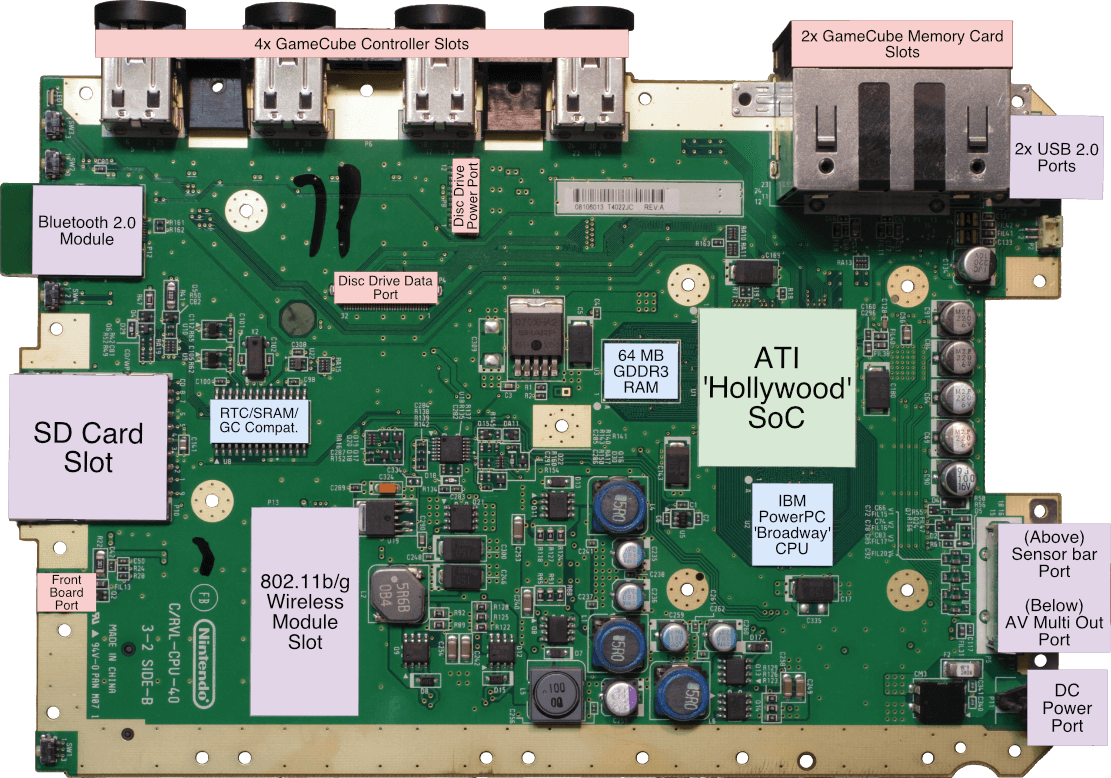
The Wii is powered by the PowerPC 750CL processor, which shares a lineage with the chips used in Apple’s early G3-series computers. Keller analyzed the Wii’s hardware configuration and determined that while its 88 MB of mixed memory is non-standard, it was sufficient to meet the minimum requirements for Mac OS X 10.0. He verified his approach using the QEMU emulator to ensure the system could boot within the console's limited memory constraints.
To achieve the port, Keller focused on adapting the Darwin kernel. The open-source foundation of Mac OS X made the port theoretically feasible, while the closed-source UI layers could be invoked once the kernel was functioning correctly. Because the Wii already has a mature homebrew environment, Keller was able to bypass standard boot restrictions and take control of hardware initialization by writing a custom bootloader.
During development, Keller abandoned the idea of porting the original Open Firmware or BootX. He found these standard bootloaders to be overly complex and filled with redundant code specific to Apple hardware. Instead, he chose to write a bootloader from scratch, retaining only the minimal hardware settings required to boot the system and load the kernel.
The complete code and documentation for the project are now available in the wiiMac repository on GitHub. Keller hopes that this project will allow more tech enthusiasts to gain a deeper understanding of how systems operate under the PowerPC architecture while breathing new life into this classic console.