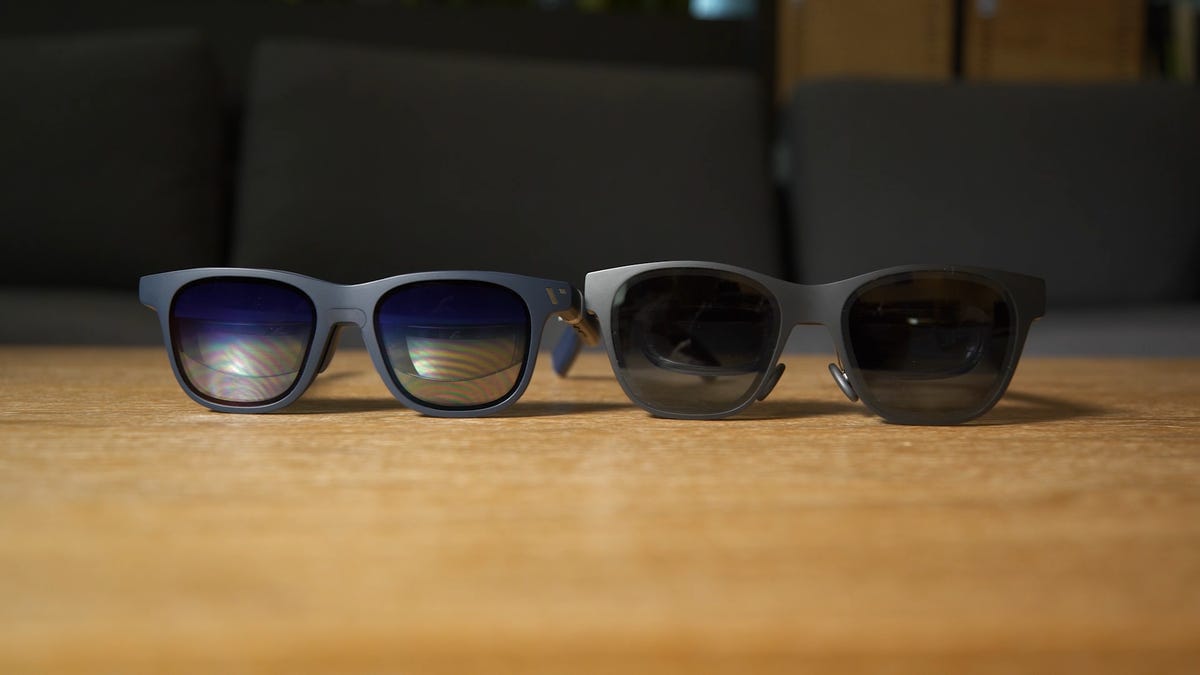
For gamers looking to connect handheld consoles like the Steam Deck or Switch to a virtual big screen, AR glasses have become a go-to portable display solution. Recently, tech media outlets conducted months of hands-on testing with three mainstream models: Xreal’s Air 1S and One Pro, and the Viture Beast.
While all these devices support 3 Degrees of Freedom (3DoF) spatial anchoring—which helps mitigate motion sickness while on the move—each product varies significantly in terms of comfort, audio quality, and visual performance. Testing indicates that no single model satisfies every requirement, meaning consumer choice ultimately comes down to individual feature preferences.
The Trade-off Between Comfort and Visual Experience
In terms of wearability, the Xreal Air 1S takes the lead at 85 grams; its superior weight distribution and slimmer temple design place less strain on the ears. By comparison, the Viture Beast weighs in at 96 grams and features a bulkier frame. Regarding audio, the Xreal’s sound profile, tuned in collaboration with Bose, excels in bass response, whereas the Viture’s Harman-tuned audio prioritizes mid-to-high frequencies.
When it comes to display quality, the Viture Beast offers better contrast and deeper blacks, with an optical design that is highly effective at reducing glare. While the Xreal One Pro is equally impressive in image quality, it typically comes at a significantly higher price point. The Xreal 1S, however, is prone to reflections in bright environments, which compromises black levels and can make the overall visual experience feel somewhat hazy.
In terms of user interface, Xreal’s control logic is more intuitive, requiring only four buttons on the right temple. The Viture Beast utilizes six buttons, including a dedicated dial for adjusting lens transparency, which some find overly complicated. Furthermore, Xreal’s spatial anchoring remains more stable than Viture’s, with the latter showing occasional screen drift during testing.
Although the Xreal 1S supports a 'Real 3D' feature that converts 2D content to 3D—performing better than expected—all current AR glasses remain limited by hardware compatibility when connecting to devices like the Nintendo Switch, often requiring the purchase of an additional dock. For users who prioritize high-quality industrial design and a seamless connection experience, Xreal currently holds the edge in overall product refinement.