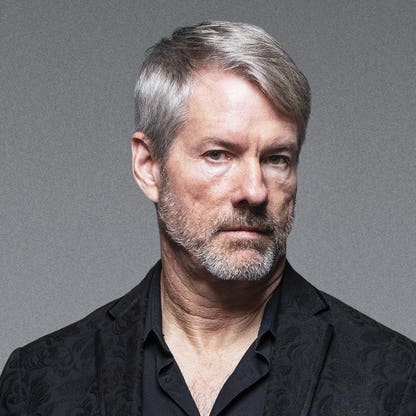
MicroStrategy Executive Chairman Michael Saylor has publicly pushed back against a recent investigation by The New York Times, which used stylistic analysis to suggest that Blockstream CEO Adam Back is the anonymous creator of Bitcoin, Satoshi Nakamoto.
On social media, Saylor made it clear that while stylistic analysis may be an interesting academic exercise, it falls far short of conclusive evidence. He pointed out that email correspondence between Satoshi and Adam Back from 2008 clearly demonstrates that the two were entirely separate individuals.
The Gold Standard of Signatures
When it comes to verifying Satoshi’s identity, Saylor remains steadfast in upholding the crypto community’s traditional standard: a cryptographic signature from the original private keys. He contends that until someone can sign a message using the addresses held by Satoshi, all speculation regarding his true identity is nothing more than a narrative game.
Saylor is a firm believer in the core ethos of Bitcoin’s decentralization. He has frequently stated that Satoshi’s decision to vanish was a calculated move. This act of "creating the protocol, relinquishing control, and walking away" has, in his view, only strengthened Bitcoin’s status as a leaderless monetary network.
MicroStrategy currently holds approximately 766,970 BTC, valued at roughly $54.57 billion, making it the world’s largest corporate holder of the asset. The company’s long-term investment thesis is built entirely on the foundation of Bitcoin’s decentralized nature and governance, rather than the identity of its creator.
Following the publication of the Times report, Bitcoin saw a brief 2.4% dip, sliding from $68,269 to $66,634. Saylor remained unfazed by the movement, having previously described such market volatility as "a gift from Satoshi to the believers."
Adam Back himself has also publicly denied being Satoshi. He explained that because both men were part of the same Cypherpunk circle and shared an interest in early Bitcoin technology, it is natural for their writing styles and terminology to overlap. He dismissed the speculation as a classic case of confirmation bias.
The stylistic study was led by computational linguist Florian Cafiero. After analyzing 12 suspects, the team concluded that Adam Back’s linguistic patterns were the closest match, though the researchers themselves acknowledged that their findings were not definitive.