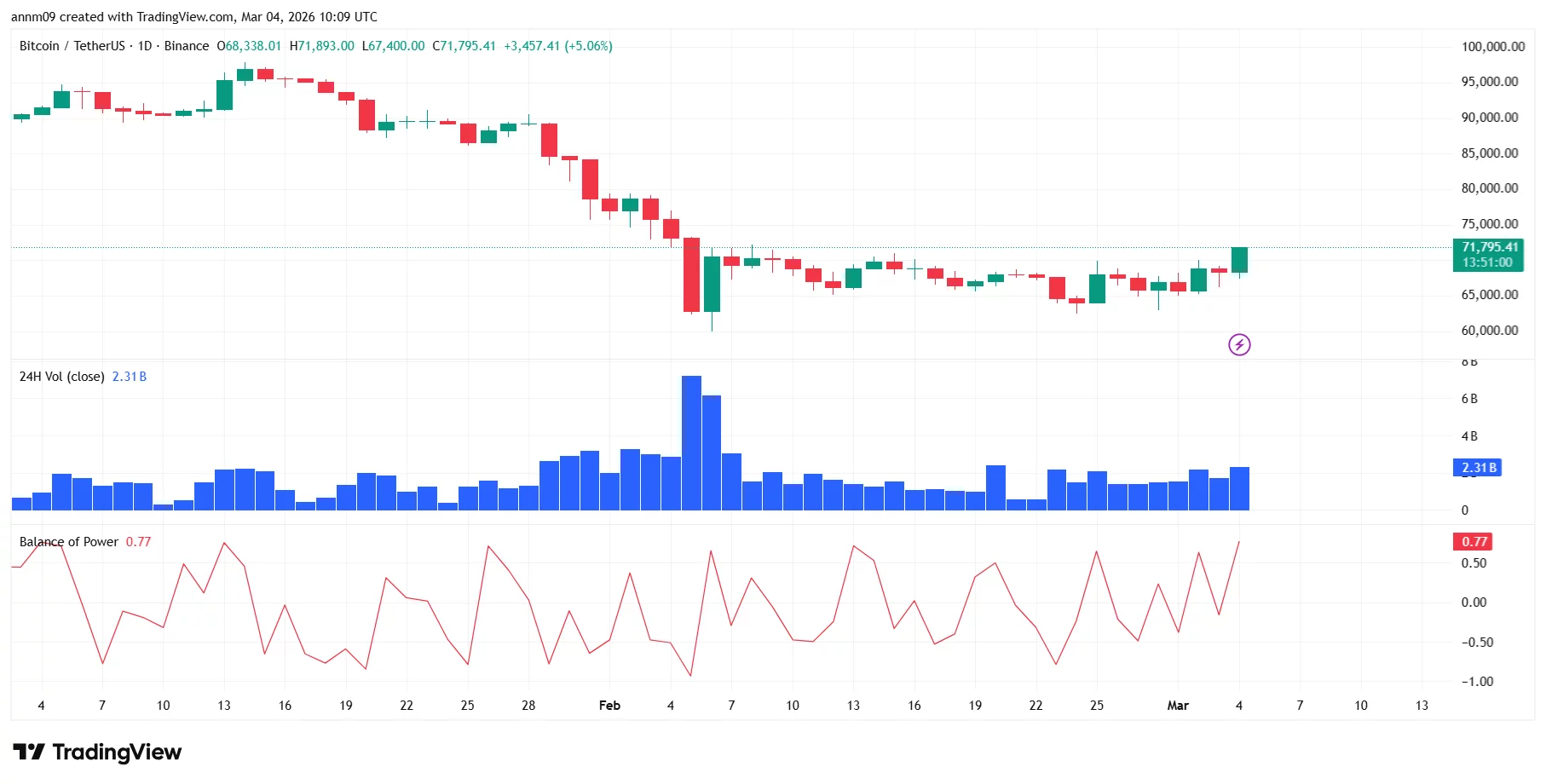
Bitcoin prices retreated from nearly $74,000 over the weekend as geopolitical tensions in the Middle East resurfaced. On April 12, BTC traded around $71,000, according to The Block's price data, following a breakdown in U.S.-Iran negotiations.
Traders faced renewed pressure as the White House escalated rhetoric regarding a potential naval blockade in the Strait of Hormuz. This instability pushed crude oil prices back above the $100 mark, reigniting inflation fears.
QCP Capital noted in a Monday research note that markets were positioned for disappointment after the talks failed. The firm stated that Bitcoin hit resistance at $74,000 as rising oil prices weakened global risk appetite.
Market stability amidst volatility
Despite the price drop, analysts suggest the current pullback lacks the panic seen in previous months. Nexo analysts observed that while the 'ceasefire-driven relief trade' is unwinding, forced selling remains contained.
Nexo pointed to nearly $1 billion in spot Bitcoin ETF inflows last week as evidence of market resilience. They noted that liquidation activity remains significantly lower than first-quarter norms, suggesting the market absorbed the weekend's volatility.
However, heavy overhead supply continues to weigh on price action. Timothy Misir, head of research at BRN, said that while Bitcoin's move back above $70,000 is meaningful, the $70,000-$80,000 range is meeting consistent profit-taking.
Misir highlighted that roughly 13.5 million addresses remain underwater, maintaining upward pressure on supply. Glassnode data supports this, showing an elevated count of addresses trading at a loss.
Market observers currently view Bitcoin as a macro-sensitive asset. The asset's performance is increasingly tied to global energy prices and inflationary indicators rather than isolated crypto-market drivers.