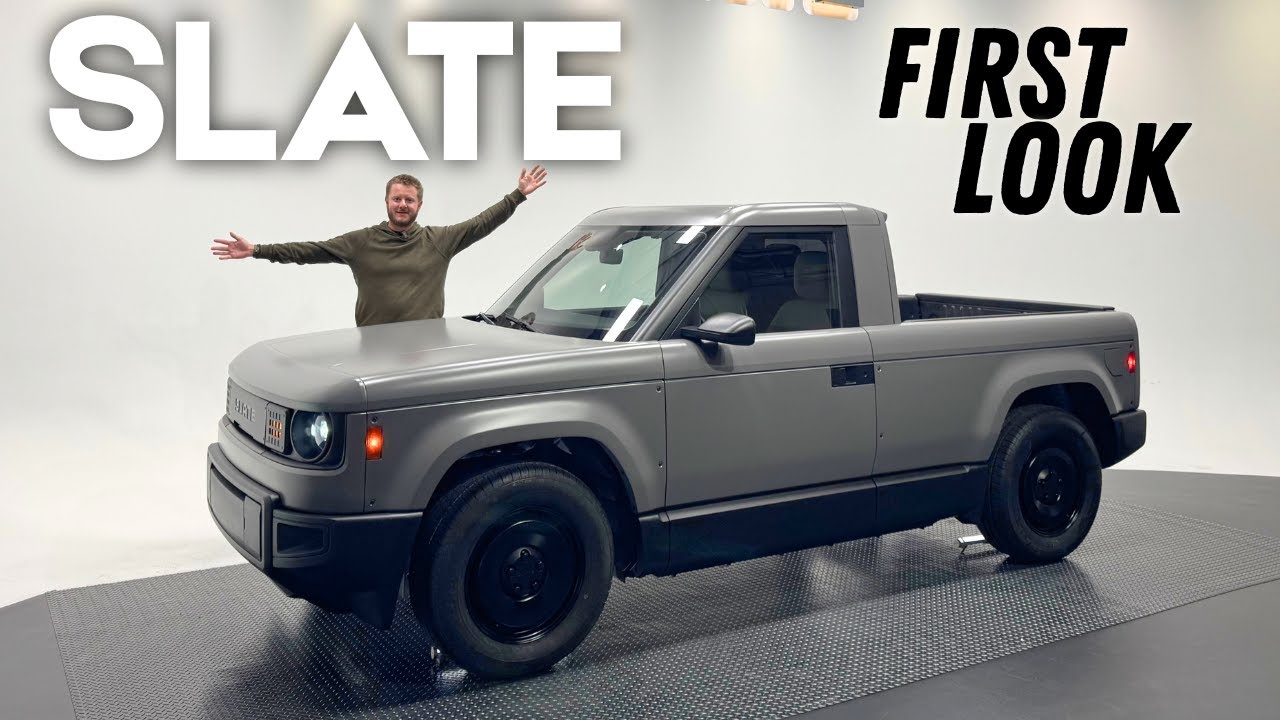
Slate recently unveiled its new electric pickup, the Slate Truck. The vehicle has turned heads with its surprisingly compact footprint—measuring roughly 174.6 inches in length and weighing just 3,602 pounds, it is comparable in size to the iconic Toyota SR5 from the film "Back to the Future."
The design is aggressively stripped-back: there is no paint, no radio, no power windows, and not even cellular connectivity. Tisha Johnson, Slate’s head of design, explained that this minimalist approach is intended to cut production costs by removing unnecessary features, passing those savings directly on to the consumer.
A Trade-off Between Utility and Personalization
Despite its small exterior dimensions, the interior is surprisingly spacious. Testers over six feet tall found that the cabin offers ample headroom and legroom. Johnson noted that the team engaged in intense internal debates before deciding to keep the air conditioning system while cutting the stereo and built-in speakers, encouraging users to simply bring their own Bluetooth speakers or customize the vehicle to their liking.
Slate has embraced a modular design philosophy, with plans to offer accessories like body wraps, custom wheels, and a conversion kit that turns the two-seater pickup into a five-seat SUV. Owners can even use 3D printing to replace parts like the grille and taillight covers. The strategy is to allow users to define their vehicle’s configuration gradually based on their budget and needs, rather than forcing them to buy a pre-set, fixed version.
However, this minimalism comes at a clear cost to performance. Because of the truck’s upright, boxy design, wind resistance is high, which significantly limits its range. The vehicle currently comes in two battery configurations: a 53kWh version with about 150 miles of range, and an 84kWh version offering up to 240 miles. By comparison, a similarly priced Chevrolet Bolt offers more range while coming standard with power windows, a radio, and built-in navigation.
Johnson emphasized that these compromises are the result of a clear understanding of the company’s target use cases. Slate believes that by offering a highly customizable aftermarket and an exceptionally low starting price, it can still attract a dedicated niche. The company has already produced 20 prototypes for a roadshow to test the market's appetite for this "blank canvas" approach to automotive design.