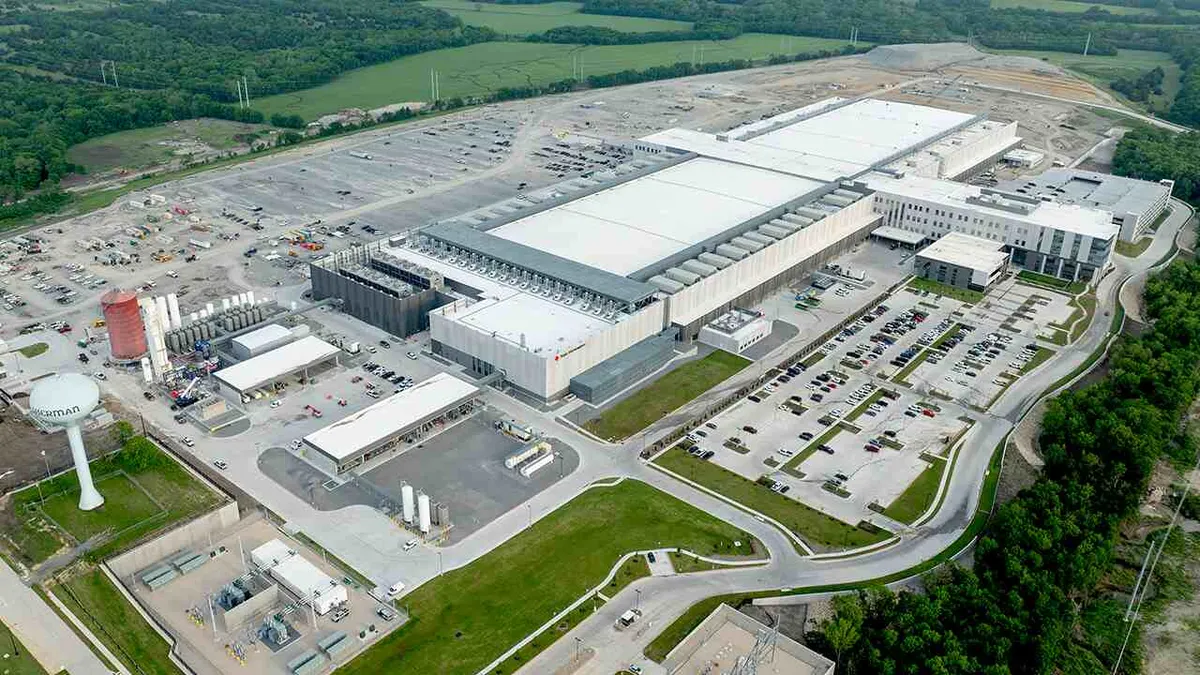
Intel officially joined Elon Musk’s Terafab project this week, agreeing to assist in the construction of a new semiconductor manufacturing plant in Texas. The partnership is designed to scale up chip production for AI computing, satellites, and Musk’s proposed orbital data centers.
Intel confirmed the collaboration in a post on X. "Our ability to design, fabricate, and package ultra-high-performance chips at scale will help accelerate Terafab’s aim to produce 1 TW/year of compute to power future advances in AI and robotics," the company stated.
Musk first unveiled the Terafab initiative in March, positioning it as a project to develop custom chips for his various ventures, including autonomous Tesla vehicles and robotics. While the specific details of Intel’s contributions remain undisclosed, the deal provides a major boost to Intel’s foundry business as it works to secure large anchor customers.
Constructing a high-end chip fabrication plant is a complex and expensive undertaking, typically requiring billions of dollars and years of development. Industry analysts have noted that the project faces significant technical hurdles, as neither SpaceX nor Tesla has direct experience in semiconductor manufacturing. By bringing Intel on board, the project gains a partner with proven, large-scale silicon production capabilities.
Market reaction and skepticism
Following the announcement, Intel’s stock rose more than 3% in trading, reaching $52.28 per share by 2 p.m. ET. Investors appear to view the deal as a critical step for Intel to regain ground lost to rivals like Nvidia and AMD, both of which have successfully leveraged the 'fabless' business model.
However, some industry observers remain skeptical of the project's ambitious goals. The Register characterized the Terafab initiative as a potential "pipedream," questioning the feasibility of Musk’s promise to increase semiconductor production by 50x for orbital infrastructure.
Intel declined to provide further details regarding the terms or timeline of the partnership. SpaceX did not respond to requests for comment regarding the project’s infrastructure requirements or its reliance on Intel’s manufacturing capacity.