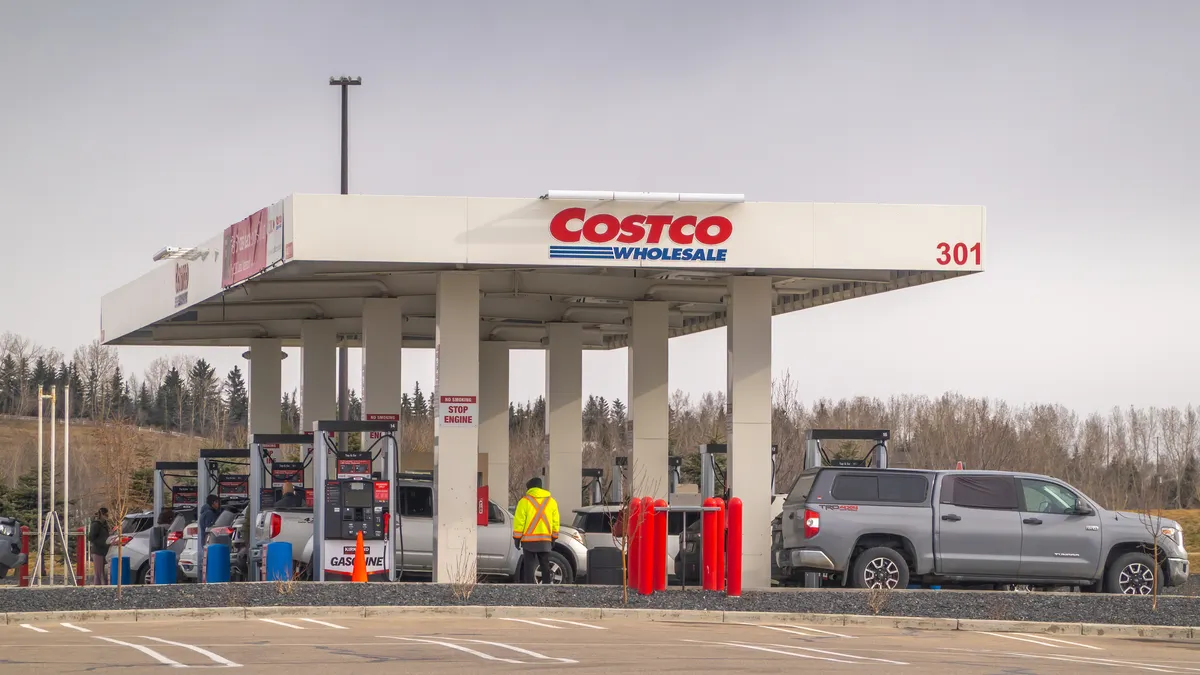
Retail giant Costco is set to shake up its long-standing fuel business model. The company plans to open its first standalone gas station this June in Mission Viejo, California. Located on a former commercial site, the station will feature 40 fuel pumps but will not include any convenience store facilities.
Since 1995, Costco has exclusively operated gas stations within the parking lots of its warehouse stores. The core of this model is to drive down prices by cutting out middlemen and marketing costs, incentivizing consumers to pay for a membership. As global oil prices remain volatile, this 'high-value fuel' strategy has become increasingly attractive to shoppers.
Expansion Strategy and Membership Economics
During the company's fiscal 2026 second-quarter earnings call, Costco CFO Gary Millerchip noted that rising gas prices often motivate members to drive a little further to secure better value. The company is not only looking at existing warehouse locations but is also actively exploring new expansion opportunities. Beyond California, reports indicate that Costco plans to open a second standalone station in Hawaii and is scouting potential sites in Livonia, Michigan.
Although these stations are large in scale, Costco has made it clear that they will focus solely on fuel, with no plans to add retail stores. Customers must present a Costco membership card to access the pumps, further strengthening the company's closed-loop membership ecosystem.
According to AAA data, the average price of regular gasoline across the U.S. has remained high recently. Market analysis shows that Costco’s fuel prices typically undercut local averages by $0.20 to $0.40 per gallon. In high-cost states like California and Hawaii, this price gap is even more pronounced. For drivers of larger vehicles, the wait in line at a Costco station can translate into significant savings.