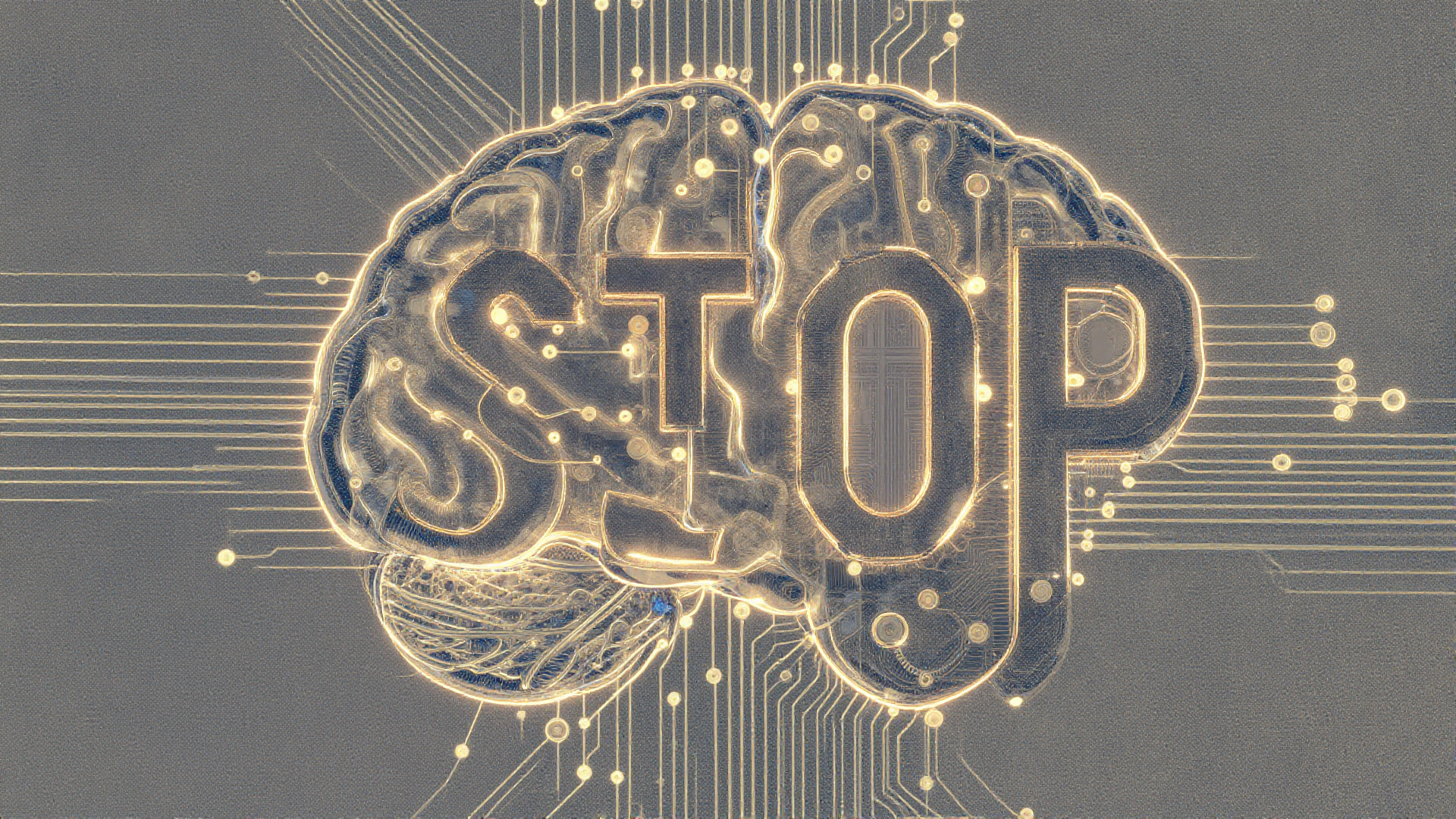
The Case for Halting AI Development: A Critical Crossroads for Humanity
The narrative surrounding artificial intelligence has become dangerously deterministic. We're told AI's dominance is inevitable, that resistance is futile, and that society must simply adapt to whatever consequences emerge. This fatalistic thinking mirrors the "inevitability" rhetoric that once justified hollowing out American manufacturing for globalization's sake—a parallel that should give us serious pause.David Krueger, an AI professor at the University of Montreal and founder of the nonprofit Evitable, argues that this inevitability narrative is not just wrong—it's dangerous. In a compelling analysis originally published by USA Today, Krueger challenges the tech industry's fundamental assumption that we have no choice but to race toward artificial general intelligence and beyond."AI companies are working to replace all human workers and concentrate power in the hands of a select few tech elites," Krueger warns. The evidence is already mounting: tens of thousands of jobs eliminated, recent graduates struggling to find employment in AI-exposed fields, and tech CEOs openly predicting human replacement within years, not decades.But the employment disruption, severe as it may be, represents just the opening act. The real concern lies in the industry's ultimate goal: what OpenAI terms "superintelligent" AI achieved through "recursive self-improvement"—essentially using AI to create progressively smarter AI until it surpasses human intelligence entirely.This isn't science fiction speculation from a technology outsider. Krueger initiated the Center for AI Safety's Statement on AI Risk in 2023, which hundreds of researchers signed to warn that AI development could pose existential risks to humanity. The statement reflects growing consensus among experts that current development trajectories could lead to human extinction or permanent disempowerment.Yet unlike natural disasters or cosmic events, AI development isn't governed by physical laws—it's a deliberate human project that can be stopped. Krueger points to successful international cooperation on nuclear non-proliferation and human cloning bans as precedents for managing transformative technologies.The path forward centers on controlling AI's critical infrastructure. Advanced AI development depends on an extremely concentrated supply chain, with Taiwan's TSMC and Netherlands' ASML playing pivotal roles in producing cutting-edge AI chips. Krueger describes these components as the "weapons-grade plutonium" of superintelligence—a bottleneck that makes verification and control feasible.Political momentum is building. Senator Bernie Sanders has proposed banning new data center construction in the United States, while Florida Governor Ron DeSantis supports local communities' rights to block such projects. From Arizona to Wisconsin, communities are rejecting data center proposals, with over a dozen states implementing moratoriums.International resistance is emerging too, with pressure mounting across Mexico and Ireland to halt data center expansion. This grassroots opposition provides a foundation for the federal action and international diplomacy that Krueger argues is urgently needed.The window for action remains open, but it's narrowing rapidly. As AI algorithms advance, we lose predictability about what current hardware might achieve. The margin for error shrinks with each breakthrough.Rather than dismissing concerns as "Luddite" thinking, we should recognize this moment as a critical crossroads. The question isn't whether we can develop superintelligent AI, but whether we should—and whether we're prepared for the consequences if we do.As Krueger concludes: "We cannot stand by while the house of humanity burns to the ground. Together, we still have the power to put out the fire." The choice remains ours, but only if we act decisively while we still can.